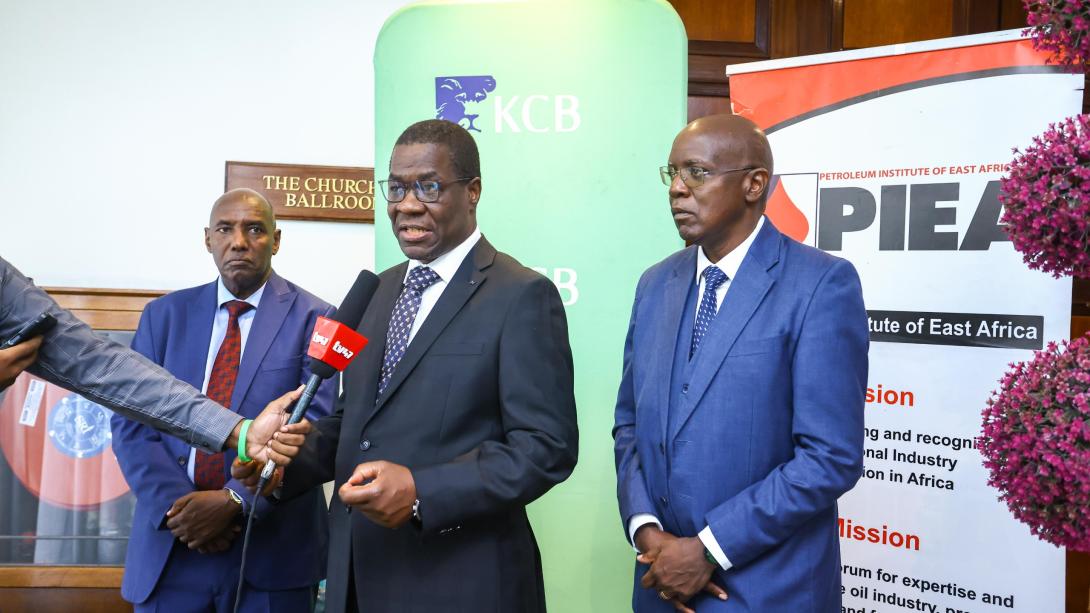
KCB Group’s Director of Corporate Banking Peter Ng’eno said the lender has issued letters of credit worth more than KSh 1.074 trillion to facilitate petroleum imports under Kenya’s Government-to-Government (G-to-G) fuel importation programme since 2022, positioning bank-backed trade finance as a key pillar in the country’s fuel supply chain.
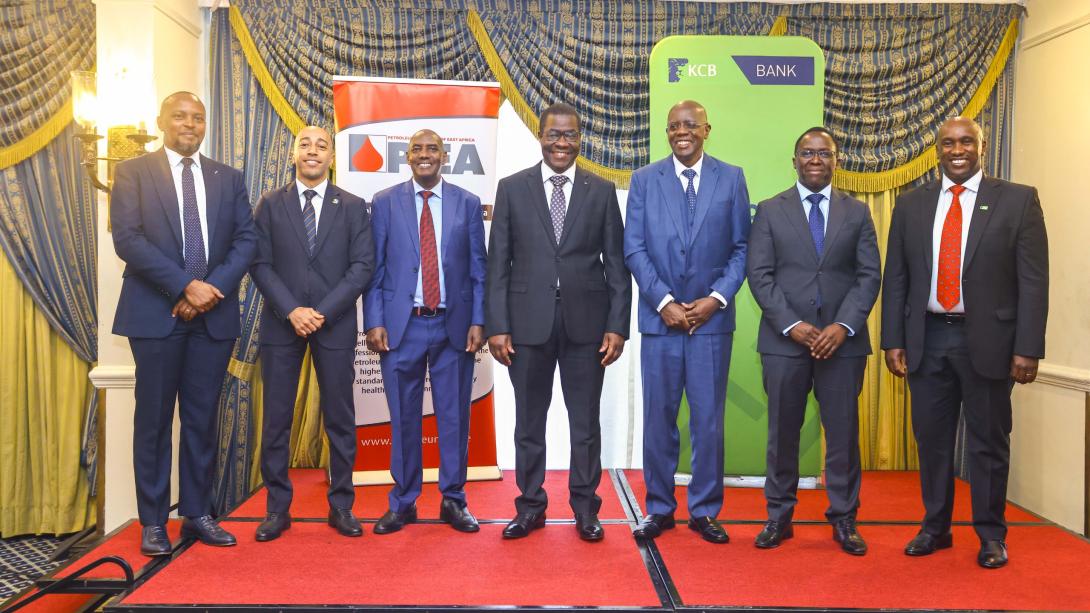
Ng’eno made the remarks on Monday, June 29, 2026, during the Petroleum Institute of East Africa (PIEA) Q2 State of the Oil Industry Briefing held at the Sarova Stanley Hotel in Nairobi, an event attended by Ministry of Energy and Petroleum Cabinet Secretary Hon. James Wandayi and PIEA chairperson Peter Murungi, according to the prepared remarks.
The G-to-G framework was introduced in 2023 to manage fuel supply and reduce immediate pressure on foreign exchange demand by altering how import financing and settlement timelines are structured. Kenya remains heavily reliant on imported refined petroleum products, making the sector sensitive to global price swings, shipping disruptions and dollar liquidity conditions.
In his statement, Ng’eno linked fuel supply resilience to access to financing, saying disruptions in global markets quickly translate into higher freight costs, insurance premiums, foreign exchange demand and working capital requirements for importers and marketers.
“I am proud to note that to date, KCB has issued Letters of Credit worth over KShs. 1.074 trillion under the programme, facilitating the importation of petroleum products that continue to power industries, businesses and households across the country,” Ng’eno said.
He said Kenya’s 2022 energy financing challenge, which he attributed to rising pressure on fuel imports and intensifying foreign exchange demand, prompted the government to seek a financial partner to operationalise a new importation framework. “KCB stepped forward as the primary financial partner under the Government-to-Government (G-to-G) fuel importation programme,” Ng’eno said, adding that the bank used its capital base and international banking relationships to support the programme’s rollout.
Beyond petroleum trade finance, Ng’eno said the bank finances different parts of the oil and gas value chain, including “upstream exploration and production,” “midstream infrastructure and logistics,” and downstream marketers and distributors. He framed the sector as central to economic activity as East Africa’s population grows and urbanisation and industrial output increase.
The remarks also pointed to recent geopolitical tensions, particularly in the Middle East, as a reminder of exposure to external supply shocks. “The recent tensions in the Middle East exposed the vulnerabilities that continue to exist within global energy markets,” Ng’eno said, noting that disruptions around key shipping routes have direct cost implications for import-dependent countries.
For Kenya’s business landscape, the disclosure underscores the scale of bank intermediation that has supported the import system at a time of constrained dollar liquidity and elevated balance-of-payments pressures. Letters of credit are typically issued in hard currency and rely on correspondent banking lines, linking domestic energy supply continuity to the health of local banking liquidity and international credit relationships.
Ng’eno also said energy security and sustainability should be pursued in parallel, calling for an energy mix that supports industrialisation while “progressively embracing cleaner and more efficient energy solutions.” He said the transition creates investment opportunities in renewable energy infrastructure and cleaner technologies, and that KCB is developing financing structures to support “tomorrow’s energy solutions.”
Looking ahead, Ng’eno said the region’s energy sector outcomes will depend on coordinated action by government, industry and financiers. “The future of East Africa’s energy sector will not be shaped by any one institution acting alone,” he said, calling for enabling policies, investment in innovation and capital mobilisation to strengthen energy security and resilience.
Photo Gallery