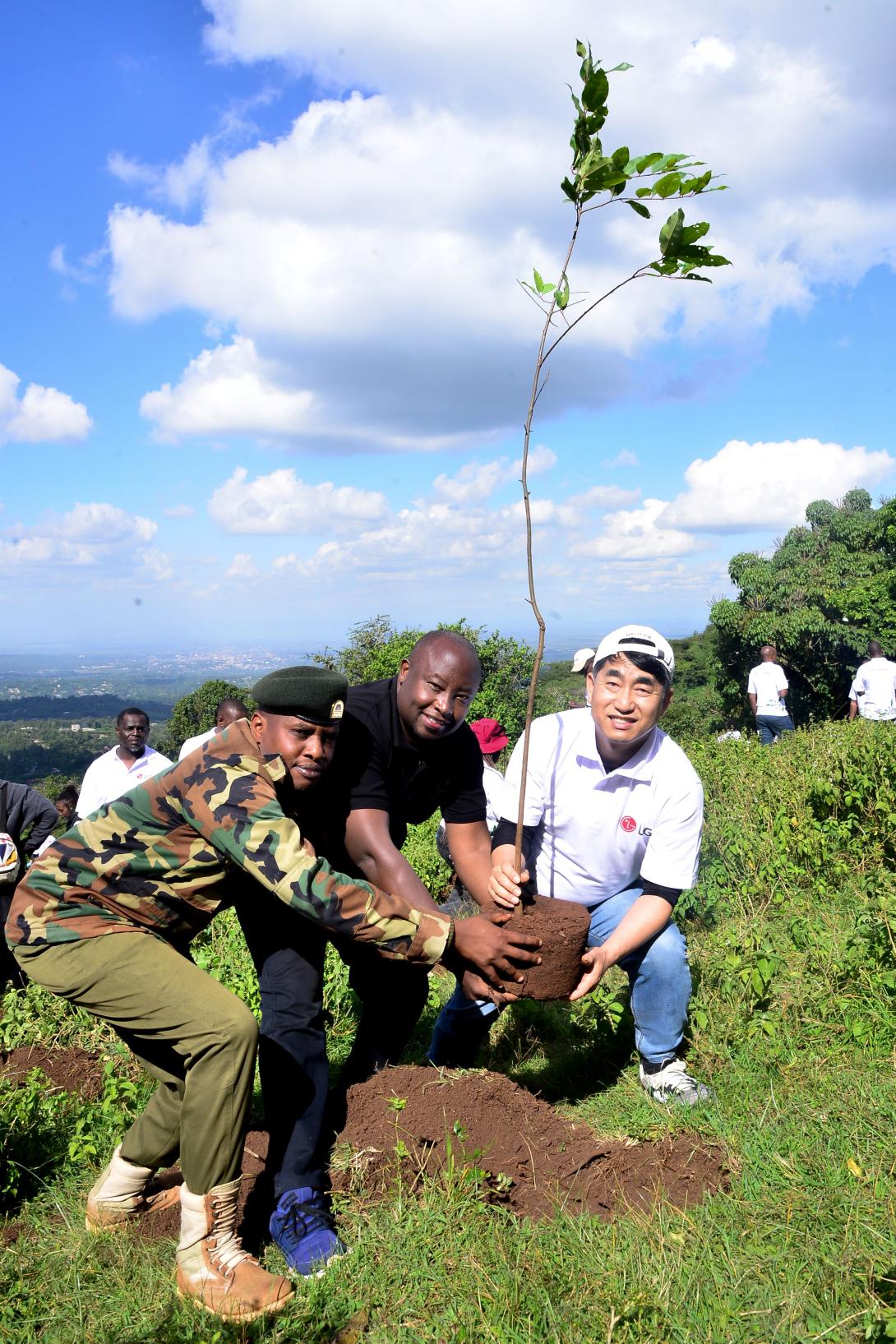
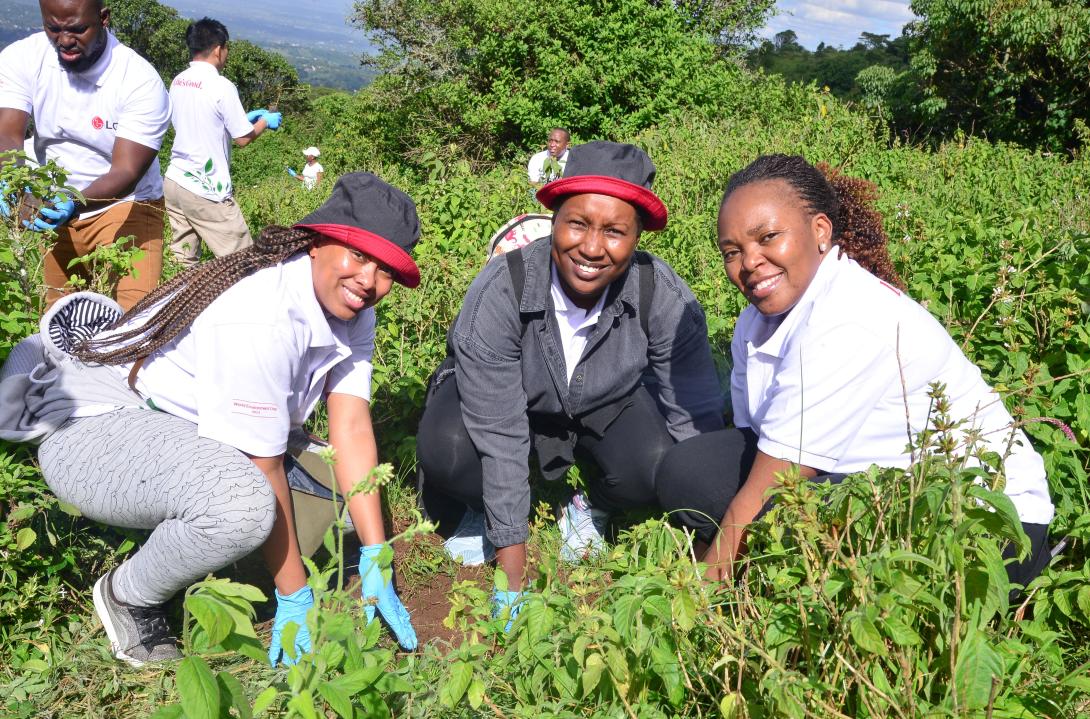
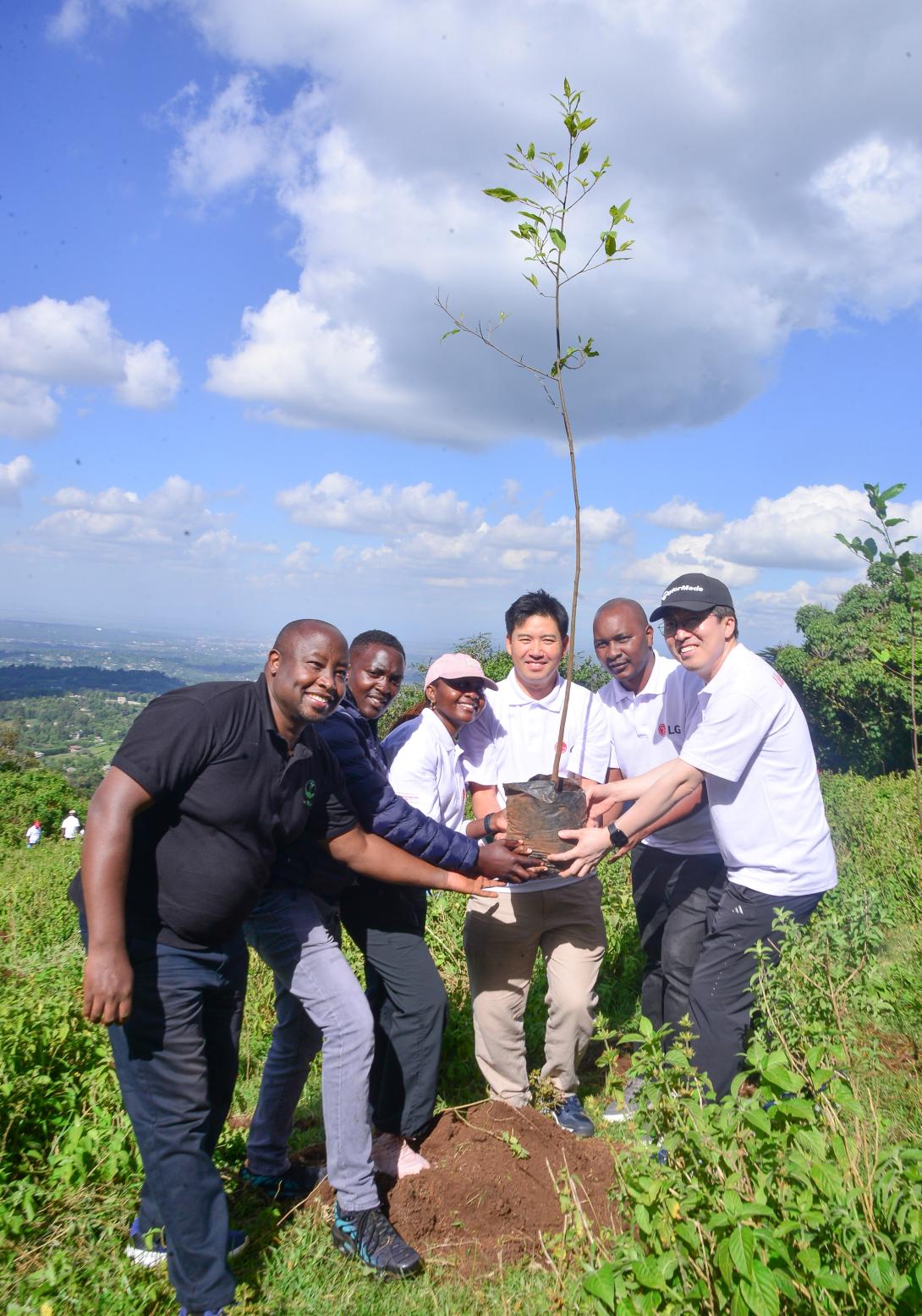
LG Electronics East Africa, in partnership with the Ngong Hills Metro Community Forest Association (CFA) and Tree Niches, planted more than 300 indigenous trees at Ngong Hills Forest on June 6, 2026, as part of efforts to restore degraded sections of a key water catchment ecosystem near Nairobi.
In a statement, the company said the activity took place in Ngong, about 25 kilometres southwest of Nairobi, in the 7,000-acre Ngong Hills Forest. LG said the forest supports communities across Nairobi, Kajiado, Kiambu and neighbouring counties as a water catchment area, and is also a recreation destination.
The tree-planting exercise comes as Kenya faces environmental degradation pressures that include “declining forest cover, biodiversity loss, prolonged droughts, flooding and increasing pressure on critical water catchment areas,” according to the press release. The company cited threats to indigenous forests from illegal logging, encroachment, charcoal production, overgrazing and unsustainable land-use practices.
LG said the 2026 activity builds on a restoration programme it launched with partners in 2025. During last year’s initiative, the partners planted more than 300 indigenous seedlings in degraded sections of the forest. Follow-up monitoring showed 252 trees survived, which LG and its partners put at an 84% survival rate.
“Last year, together with our partners, we planted more than 300 indigenous trees in this forest. We are pleased that 252 of those seedlings survived, achieving an 84 percent survival rate,” said Donghun Lee, President of LG Electronics East Africa. “That success demonstrates that meaningful restoration is possible when tree planting is followed by proper care and monitoring. It has also motivated us to return and plant another 300 trees as part of our long-term commitment to environmental sustainability.”
The company also donated four benches that it said will be installed at “strategic locations throughout the forest.” LG said the benches are intended to improve the experience of visitors and hikers and encourage appreciation for conservation.
Tree Niches said the initiative reflects the importance of ecosystem restoration through sustained collaboration. “Kenya has lost significant portions of its natural ecosystems over the years due to deforestation and land degradation. Every successful restoration project helps reverse that trend,” said Dr. Solomon Kipkoech, Co-founder and Director of Tree Niches. “The impact of such initiatives go beyond the trees planted to demonstrate the value of sustained partnerships and community-led conservation.”
For Kenya’s business landscape, corporate participation in forest restoration has become increasingly visible as climate variability affects sectors such as agriculture, energy, insurance and tourism. Water catchments near major urban centres also have direct implications for industrial and household water availability, and for operational risk management for companies with supply chains dependent on water resources.
The reported 84% survival rate from the 2025 planting, if sustained in subsequent seasons, could be significant because survival rates—rather than planting numbers—determine whether restoration projects translate into lasting canopy recovery. However, survival outcomes can vary with rainfall patterns, species selection and long-term maintenance, meaning continued monitoring will remain central to assessing impact.
LG said it will now be responsible for more than 520 trees grown at Ngong Hills Forest over a two-year period, based on the 252 surviving seedlings from 2025 and the new planting in 2026. The partners did not disclose the budget or cost of the programme. Next milestones are likely to include follow-up maintenance and survival audits of the newly planted trees, as well as installation of the benches at designated sites in the forest, according to the statement.
Photo Gallery