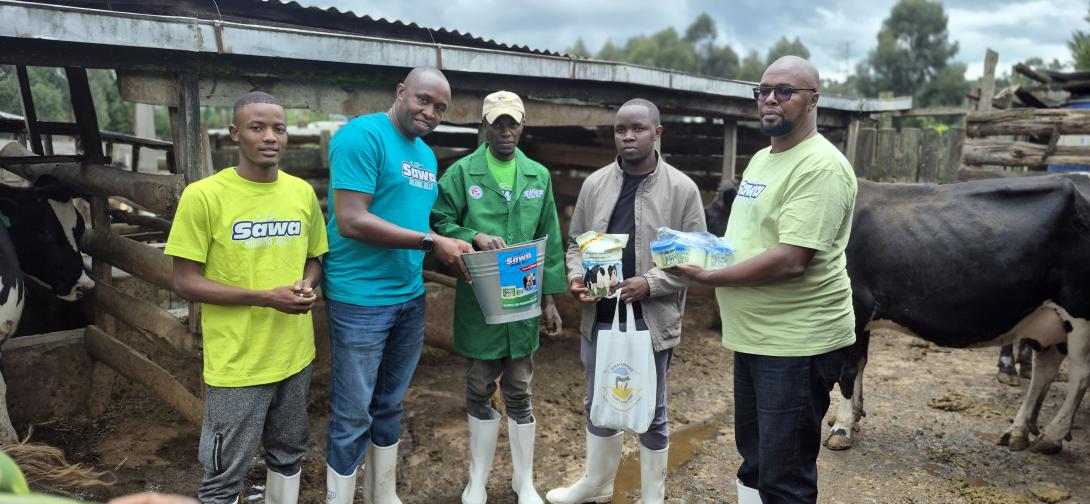
Pwani Oil Products Ltd’s Sawa Milking Jelly has kicked off a nationwide farmer empowerment initiative aimed at reducing losses in Kenya’s dairy sector by addressing mastitis infections, poor hygiene and declining milk quality, the company said on June 9, 2026, in Nairobi.
According to Pwani Oil, the campaign will run until August 2026 and will pass through 17 towns across four counties—Bomet, Narok, Nyandarua and Murang’a—targeting 105 mini farm activations and two regional intensive farm activations. The company said the programme will focus on practical education for farmers on udder care, mastitis prevention, milk hygiene, cow wellness and improved milking practices.
The initiative is being carried out in partnership with AMA Energy, which Pwani Oil described as an animal feed additive. In the statement, Pwani Oil said the partnership is intended to support farmers through “practical education, animal wellness support and improved milking practices.”
The campaign comes as the dairy sector faces animal health constraints and pressure to meet higher milk quality standards—issues that can directly affect farm incomes and processor supply chains. Mastitis, which reduces yields and can lower milk quality, is a persistent cost for smallholder farmers who account for a large share of Kenya’s milk production.
Speaking during a farmer engagement forum in Gatanga, Murang’a County, James Faraja, Brand Manager for Sawa Milking Jelly, said farmers require targeted support to improve outcomes at farm level. “Kenya’s dairy farmers are at the centre of the country’s food systems and rural economy. Supporting them with practical knowledge, proper udder care education and animal wellness solutions is essential in improving milk quality, protecting livestock health and building more sustainable farming communities,” Faraja said.
Pwani Oil cited data from the International Centre for Antimicrobial Resistance Solutions indicating that subclinical mastitis—mild infections without visible clinical signs—has a high prevalence in Kenya, exceeding 50%, according to the organisation. The company linked the prevalence to reduced productivity and quality challenges in dairy production.
At the same Gatanga engagement, veterinary expert Job Munene said mastitis is a key driver of farm-level losses in the region. “The condition not only affects milk quality and farmer earnings but also impacts animal comfort, welfare and long-term farm sustainability. Many of these losses can be reduced through greater farmer education, preventative animal care and improved milking hygiene practices,” Munene said.
Pwani Oil also referenced broader sector context from the Food and Agriculture Organisation of the United Nations (FAO), which it said estimates the global dairy sector supports more than 150 million farming households worldwide and is important for food security and rural development. The company further cited “agricultural sustainability studies published in late 2025” linking improved dairy hygiene and animal health practices to progress on selected United Nations Sustainable Development Goals, though it did not name specific studies.
For Kenya’s agribusiness value chain, improved farm hygiene and mastitis control can have knock-on effects on processor efficiency, product quality compliance and antimicrobial use, particularly as buyers and regulators intensify scrutiny around food safety and residues. If adopted at scale, better on-farm practices can reduce spoilage, improve yields and stabilise supply for formal milk markets.
Pwani Oil said AMA Energy will support the programme through grassroots engagement intended to strengthen connections with farmers. The company did not disclose the programme budget or the number of farmers it expects to reach, but said the campaign will include community engagement and storytelling to highlight farmer experiences and challenges.
Photo Gallery