Technology

Connected Africa Summit leaders urge policy harmonisation to unlock seamless connectivity

Connected Africa Summit leaders urge policy harmonisation to unlock seamless connectivity

3 min read
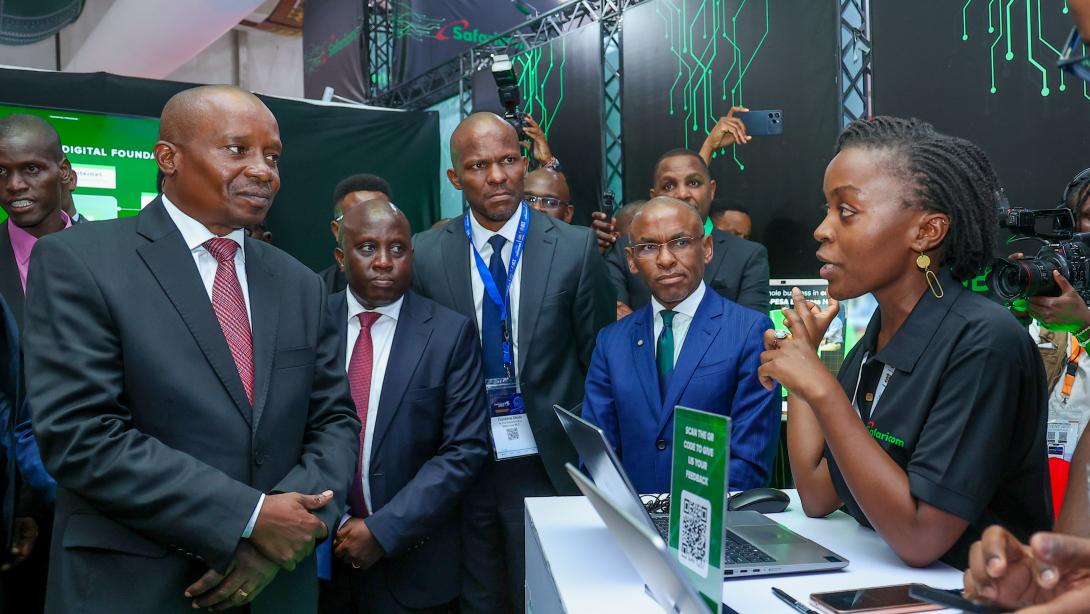
Policymakers and technology industry leaders on Monday convened in Nairobi for the 15th annual Connected Africa Summit and called for the removal of structural and regulatory frictions to enable seamless connectivity across Africa.

According to a statement issued from the summit at the Edge Convention Centre on April 28, 2026, participants said Africa’s push toward a unified digital market will require greater policy alignment and collaboration among governments, regulators and private-sector players.

The summit discussions framed connectivity as a prerequisite for digital public services, private innovation and cross-border trade. Speakers cited Africa’s youthful population, growing digital adoption and expanding infrastructure as foundations, but said fragmentation in rules and implementation continues to slow progress.

Safaricom Plc’s Group Chief Executive Officer Peter Ndegwa used a panel session to argue that governments and the private sector must coordinate more closely on infrastructure and digitisation priorities.

“To unlock Africa's full potential, we must deepen collaboration between governments and the private sector. By working together, we can create enabling policies, invest in the right infrastructure and accelerate public sector digitisation in a way that is inclusive, scalable and impactful for millions of Africans,” Mr Ndegwa said.

Safaricom said it used the summit to showcase what it described as the digital capabilities of its “converged services” model, bringing together its enterprise unit, financial services, public sector digitisation and transformation team and technology functions. The company said the approach is meant to support governments with what it termed secure and scalable digital solutions.

Kenya’s Deputy President Prof. Kithure Kindiki also called for public-private partnerships and greater citizen involvement in digital transformation programmes.

“The public sector does not have a monopoly on resources. In order to achieve inclusion in the digital market, we must collaborate with the private sector and the citizens themselves,” Prof. Kindiki said.

The summit’s focus on harmonisation matters for Kenya’s business environment because local telecoms, fintechs and enterprise technology firms increasingly build products that must operate across multiple jurisdictions, each with different licensing, data protection, spectrum and consumer rules. Regulatory alignment can lower compliance costs and reduce friction for services such as mobile money, cross-border payments, digital identity and e-government platforms.

For listed firms such as Safaricom, policy direction around public sector digitisation and regional interoperability can influence future investment decisions and growth opportunities in enterprise services and fintech. In its statement, Safaricom said it serves more than 60 million customers across Kenya and Ethiopia and estimated its total economic value at KES 1.1 trillion (US$8.5 billion) for the 12 months through March 2025. The company also reported annual revenues of close to KES 388 billion as at March 2025 and said its networks cover more than 99% of Kenya’s population.

Safaricom further reported that M-PESA generated over KES 161 billion in revenue in FY25 and that financial inclusion in Kenya reached 84.8% in 2024, up from 26.7% in 2006, attributing the shift to mobile money adoption.

The summit is set to continue into a third day on April 29, 2026, with organisers and participants calling for renewed commitments and coordinated action. The discussions are expected to continue centring on policy alignment, infrastructure investment and governance frameworks intended to support Africa’s digital market ambitions.

Policymakers and technology industry leaders meeting in Nairobi for the 15th Connected Africa Summit have called for the removal of regulatory and structural barriers to improve cross-border connectivity. Safaricom CEO Peter Ndegwa and Kenya’s Deputy President Kithure Kindiki urged closer public-private collaboration to accelerate public sector digitisation and inclusion.
Smart Applications International wins Product and Service Innovation of the Year at 3i International Conference 2026

Smart Applications International wins Product and Service Innovation of the Year at 3i International Conference 2026

4 min read

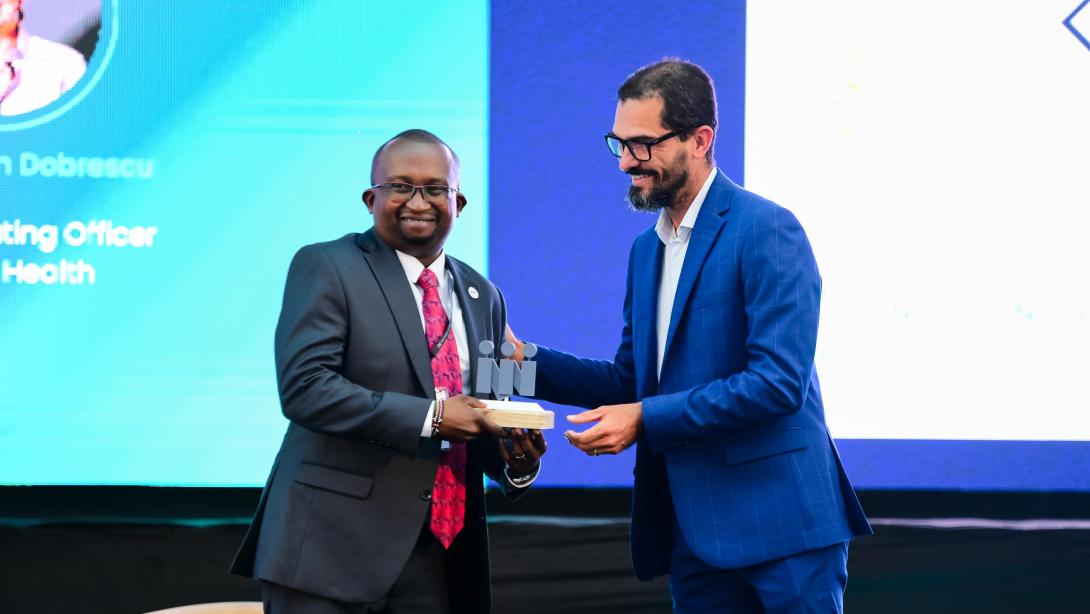
Smart Applications International, a Nairobi-headquartered healthcare technology company, has won the Product and Service Innovation of the Year award at the 3i International Conference 2026, the firm said in a press release dated April 27, 2026.

According to the company, the award was presented at the 3i International Conference 2026, a global forum convened by the Insurers Association of Mauritius focused on the future of insurance and healthcare, including the growing role of artificial intelligence (AI) and insurer–provider collaboration.

The recognition adds to the profile of Kenyan health-tech in regional and international markets at a time when insurers and healthcare providers are investing in digitised claims management, fraud detection, identity systems and data-driven oversight. In Kenya, these themes mirror broader sector priorities such as reducing claims leakage, improving turnaround times and strengthening accountability across provider networks.

Smart Applications International said this year’s conference discussions centred on “the growing role of artificial intelligence, the need for stronger insurer–provider collaboration, and the importance of unlocking value through integrated digital ecosystems.”

The company said it was represented at the Mauritius forum by Harrison Muiru, Group Managing Director; Esther Muiruri, Group Director, Insurance Business; and Yan Jouan, Country Manager, Mauritius. It said its delegation contributed to discussions on AI adoption in healthcare and the role of digital platforms in improving efficiency within insurance value chains.

“This recognition is a strong validation of our commitment to delivering meaningful, technology-led transformation in healthcare and insurance. As systems grow in complexity, the need for intelligent, integrated platforms becomes even more critical,” Harrison Muiru, Group Managing Director, Smart Applications International, said in the statement.

Muiru added that the company’s focus is on “building solutions that not only improve efficiency, but also strengthen trust, transparency, and collaboration across the entire ecosystem,” according to the press release.

Yan Jouan, Country Manager, Mauritius, said resilient healthcare systems require “a combination of intelligent digital infrastructure and strong local expertise,” and pointed to MediSmart and SmartInsure as tools that can help insurers automate processes while maintaining human oversight, the company said.

Smart Applications International said the award reflects its “growing footprint in international markets” and its work supporting “seamless service delivery,” improved claims management and data-led decision-making through platforms including MediSmart and Smart Insure.

For Kenya’s insurance and healthcare sectors, the company’s emphasis on integrated digital ecosystems aligns with increasing pressure on insurers to manage medical costs and improve customer experience, while providers face demands for faster approvals, better data quality and stronger compliance controls. Industry players in East Africa have also been testing AI-driven tools to address operational bottlenecks, though adoption often depends on interoperability with existing systems and regulatory expectations around data privacy and clinical governance.

In its company backgrounder, Smart Applications International described itself as an ISO-certified healthcare technology company headquartered in Nairobi, delivering digital health, biometric identity and analytics platforms across Africa. It said it works with governments, healthcare providers, insurers and development organisations to improve service delivery and expand access to essential services.

The company did not disclose financial terms linked to the award or provide metrics on adoption of its platforms. It also did not announce new contracts or market expansion timelines in the statement.

Smart Applications International said it expects continued focus globally on practical applications of AI and digital technologies in insurance and healthcare, positioning integrated platforms as central to future system improvements.

Nairobi-headquartered health-tech firm Smart Applications International has won the Product and Service Innovation of the Year award at the 3i International Conference 2026 in Mauritius. The company said the recognition reflects its work on digital platforms used in healthcare and insurance, including MediSmart and Smart Insure.

Safaricom commits KES 22 million as title sponsor of Connected Africa Summit 2026

Safaricom commits KES 22 million as title sponsor of Connected Africa Summit 2026

3 min read

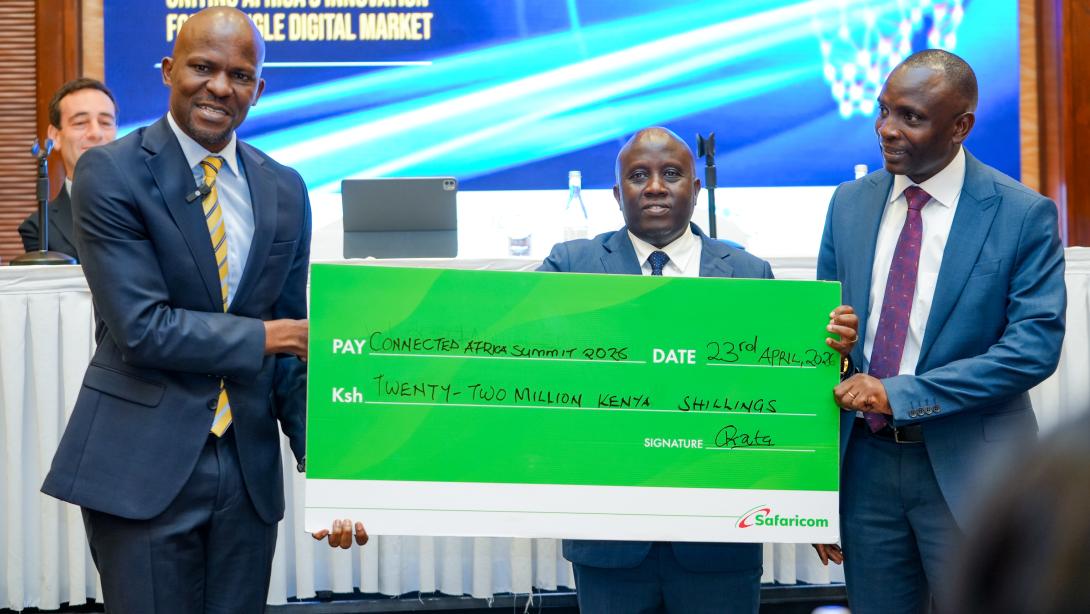
Safaricom (NSE: SCOM) has committed KES 22 million to serve as the title sponsor of the 2026 Connected Africa Summit, scheduled for next week in Nairobi, according to a company press release dated April 23, 2026.

The summit brings together policymakers, regulators and private-sector players to discuss Africa’s digital transformation, at a time when governments are ramping up programmes to modernise public services and expand digital access.

Safaricom Chief Executive Officer Peter Ndegwa said the next phase of digitalisation requires solutions that can operate reliably at national scale. “Africa’s digital journey is at a point where it is no longer about what is possible, but what can work at scale. There has been strong progress in digitisation, but the focus now is on making systems work in a consistent and practical way,” Ndegwa said.

He added that public-sector digitisation increasingly depends on implementation partners who can deliver end-to-end systems. “Governments need partners who can deliver integrated, secure, and practical solutions that improve how citizens experience services every day. That means building solutions that are connected, secure, and designed around how people use services,” Ndegwa said.

Safaricom said it has supported the Connected Africa Summit since its inception in 2009, positioning its involvement as part of long-running public-private collaboration on regional ICT priorities. “We have supported the summit since its inception in 2009 and in that journey, we have seen firsthand how collaboration across government, industry, and partners has shaped the region’s digital agenda,” Ndegwa said.

The company linked those collaborations to outcomes such as connectivity build-out and growth in digital infrastructure. “Together, we have contributed to key milestones, from infrastructure expansion to the growth of the digital superhighway. These are not just policy wins. They are foundations for a functioning digital economy,” he said.

The announcement comes as Kenya and several African governments push forward digital public service delivery—covering identity systems, payments, citizen service portals and sector-specific platforms—raising demand for secure connectivity, interoperable systems and resilience in critical infrastructure. For Kenya’s business landscape, the summit is typically a forum where public procurement priorities, technology standards and partnerships are discussed, shaping opportunities for telecoms operators, fintechs, systems integrators and cloud and cybersecurity providers.

In the press release’s background section, Safaricom said it serves more than 60 million customers across Kenya and Ethiopia and reported annual revenues of close to KES 388 billion as at March 2025. The company also cited an estimated total economic value of KES 1.1 trillion (US$8.5 billion) for the 12 months through March 2025, and said its network coverage spans more than 99% of Kenya’s population across 2G, 3G, 4G and 5G in aggregate.

Safaricom further said M-PESA generated over KES 161 billion in revenue in FY25 and cited an adult financial inclusion rate of 84.8% in 2024, up from 26.7% in 2006, attributing the figures to its mobile money platform’s role in enabling transactions, savings and credit through mobile phones.

Looking ahead, the title sponsorship places Safaricom at the centre of a high-profile policy and industry meeting that may influence regional priorities on digital infrastructure, government services and cybersecurity. The company did not provide additional breakdowns of how the KES 22 million will be spent, but said the funds are intended to support the success of the conference.

Safaricom has committed KES 22 million to become the title sponsor of the 2026 Connected Africa Summit, scheduled for next week in Nairobi. The telco said the sponsorship supports the summit’s focus on practical, scalable digital public services and broader digital access across the continent.

PayKit launches in Kenya, targets 15,000 merchants and regional expansion

PayKit launches in Kenya, targets 15,000 merchants and regional expansion

4 min read

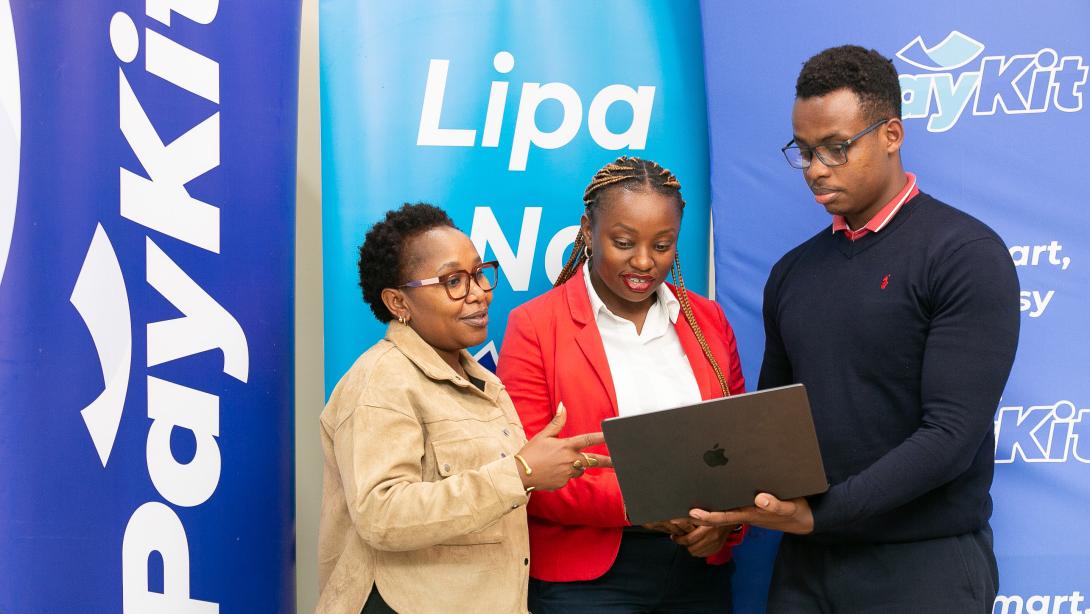
Payments platform PayKit has launched in Kenya, positioning its services around high-volume payments, reconciliation and multi-currency capabilities for micro, small and medium-sized enterprises (MSMEs) and digital platforms. The company said on April 22, 2026 in Nairobi that it processed about KES 30 million in transaction value during a pilot phase over the last 2.5 months and is targeting 50–60 million transactions by the end of the year.

The launch comes as Kenya’s digital payments market continues to deepen, driven largely by mobile money. PayKit cited data from the Communications Authority of Kenya showing mobile money penetration exceeds 98% of the adult population, with more than 51 million active accounts and annual transaction volumes above KES 8.6 trillion.

PayKit’s strategy is aimed at businesses that increasingly require tools to manage disbursements, settlement and back-office processes as transaction volumes rise and more firms trade across borders. The company argues that many payment providers still concentrate on consumer wallets or basic collections, leaving operational gaps for businesses dealing with complex financial flows.

The focus on MSMEs is significant in Kenya’s business landscape. PayKit referenced Kenya National Bureau of Statistics data indicating the country has about 7.4 million MSMEs—around 98% of all business entities—contributing about 30% to 40% of GDP and employing more than 14.9 million people.

“Digital payments in Kenya have largely solved access. The next challenge is scale and efficiency because businesses today need need to send, reconcile, settle and manage funds across multiple channels and currencies in real time, in addition to receiving payments,” said Beatrice Okeyo, PayKit’s CEO.

According to the press release, PayKit’s product set includes high-volume disbursements for supplier and payroll payments, faster settlement to support cash flow, and “intelligent reconciliation” to reduce manual matching of payments to transactions. The firm also said it offers multi-currency support, which it framed as increasingly important as Kenyan businesses expand across borders and as new payment corridors emerge.

PayKit said it is regulated by the Central Bank of Kenya (CBK). It was founded in 2023 and has been developing and refining its technology since then, while setting up operations and securing approvals to operate in the country, according to the company.

In its growth plan, the firm said it aims to onboard about 15,000 merchants by year-end and reach 500,000 mobile app downloads, supported by a merchant portal and a mobile application.

“There is a clear need for more advanced payment infrastructure because many businesses in Kenya, and indeed most of Africa, continue to face challenges such as limited interoperability and high operational overheads. In many sectors, cash and manual processes still play a significant role, highlighting the gap between access to digital payments and the ability to use them efficiently at scale. This is the gap that PayKit sufficiently bridges,” Okeyo said.

Regionally, PayKit said it is evaluating expansion within 18 to 24 months, with Rwanda identified as a priority market. The company attributed its interest to what it described as an enabling regulatory environment that allows payment service providers to operate more seamlessly without needing to register afresh in the country.

For Kenya’s fintech and payments sector, PayKit’s entry adds to competition among payment service providers seeking SME volumes beyond basic collections, as businesses demand interoperability, automation and improved controls. The company’s ability to meet its transaction, merchant and adoption targets is likely to depend on integration depth with existing payment rails, pricing, and operational reliability at scale—areas that have increasingly differentiated providers in a crowded market.

PayKit said its next milestones include scaling transaction volumes through its portal and app, expanding its merchant base, and progressing regulatory and market evaluations for entry into other East African markets.

Payments platform PayKit has launched in Kenya, saying it will focus on payment infrastructure for MSMEs and digital platforms that handle high-volume transactions. The company says it processed about KES 30 million in transaction value during a 2.5-month pilot and is targeting 15,000 merchants, 500,000 app downloads and 50–60 million transactions by the end of 2026.

Four Kenyan startups join Google for Startups Accelerator Africa Class 10

Four Kenyan startups join Google for Startups Accelerator Africa Class 10

3 min read

Google has selected four Kenyan startups—Comana, Duck, ReportsAI and VunaPay—to join the 10th cohort of the Google for Startups Accelerator Africa, the company said in a press release dated April 21, 2026 in Nairobi.

According to Google, the Kenyan firms were picked from nearly 2,600 applications as part of a final pan-African group of 15 companies, implying an acceptance rate of less than 1%.

The selected Kenyan startups apply artificial intelligence across supply chains, data reporting and financial services. Comana builds technology aimed at helping governments and market associations digitise informal food markets. Duck operates a real-time data intelligence platform designed to give consumer brands shop-floor visibility to help prevent stockouts. ReportsAI provides an “AI-first” platform that it says helps impact organisations convert raw data into compliance-ready reporting. VunaPay builds fintech and data infrastructure for cooperatives, with a focus on instant payments and financial services for smallholder farmers.

The announcement comes as Kenya’s startup sector continues to position itself as a hub for fintech, logistics and enterprise software in East Africa, while investors increasingly scrutinise pathways to revenue and scalability. Google said the wider African venture ecosystem raised $3.9 billion (about KES 507.0 billion) in 2025, underscoring ongoing capital availability despite tougher global fundraising conditions. The company argued that deep-tech and AI-focused startups still require access to technical infrastructure, cloud capabilities and mentorship to scale.

Hafsah Jumare, CEO of Nairobi-based Comana, said the accelerator would support the company’s efforts to expand its market data product to more locations. “Most food trade across Africa happens in traditional markets, but these markets remain largely invisible and unsupported. With MarketView, we’re building infrastructure to make them visible, using AI to interpret real-time data so businesses and governments can actually see what’s happening and act on it,” Jumare said. “Through the accelerator, we’re focused on scaling this across more markets and strengthening the underlying data systems and integrations that make this intelligence usable at scale.”

Google said the programme will run from April 13 to June 19, 2026 in a hybrid format, offering mentorship and technical workshops focused on AI and machine learning.

Folarin Aiyegbusi, Head of Startup Ecosystem, Africa, said Google’s intent is to support founders with technical resources and networks as they scale. “We are absolutely thrilled to welcome these exceptional founders into Class 10,” Aiyegbusi said. “Our role is to serve as a supportive partner, providing these developers and founders with the technical infrastructure, mentorship, and global network they need to scale their solutions and amplify their real-world impact.”

For Kenya, participation by four firms signals continued alignment between local startup activity and enterprise and public-sector demand, particularly in digitising informal markets, improving retail availability, strengthening reporting and compliance, and expanding cooperative-based financial services. These areas remain central to productivity and resilience in the Kenyan economy, where informal trade and smallholder agriculture employ large segments of the workforce.

Google said that since the accelerator launched in 2018, it has supported 106 startups across 17 African countries, which the company says have collectively raised more than $263 million (about KES 34.1 billion) and created more than 2,800 jobs.

The next milestone for the cohort will be completion of the programme in June 2026, after which participating startups typically pursue follow-on fundraising, partnerships, and expanded commercial deployments based on product and technical improvements developed during the accelerator.

Google has selected four Kenyan startups—Comana, Duck, ReportsAI and VunaPay—for the 10th cohort of its Google for Startups Accelerator Africa programme. The cohort runs from April 13 to June 19, 2026 and includes 15 startups chosen from nearly 2,600 applications, according to the company.

Safaricom, Sprite host Pwani University content creation masterclass as students seek digital income

Safaricom, Sprite host Pwani University content creation masterclass as students seek digital income

4 min read

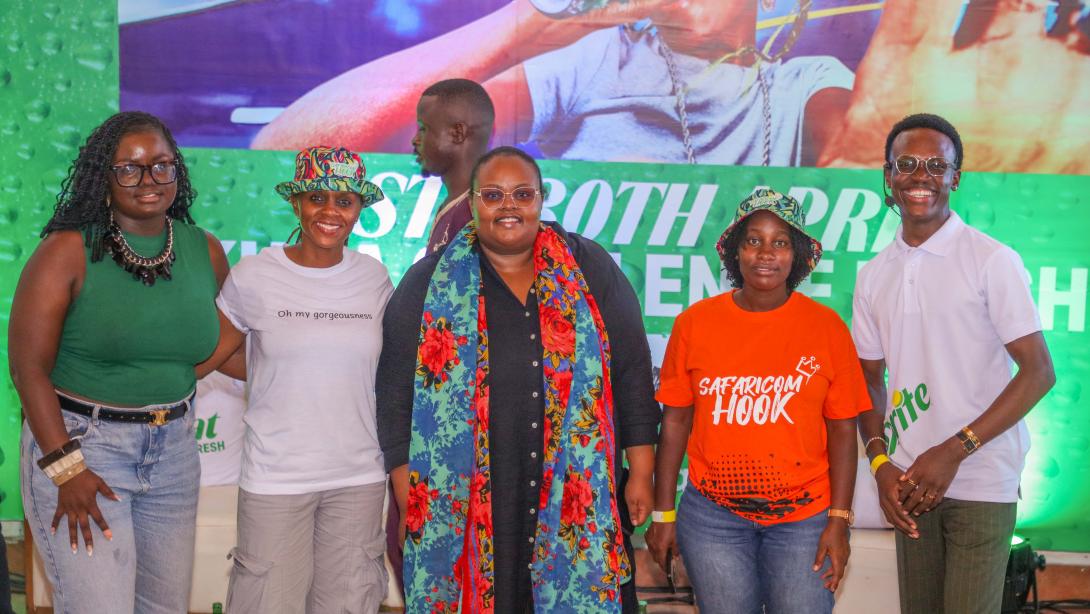
Safaricom PLC and Sprite on April 11, 2026 hosted a “Hook’d on Fresh” content creation masterclass at Pwani University in Kilifi, bringing together more than 500 students for sessions on monetising content on platforms such as TikTok, Instagram and YouTube, according to a joint statement.

The event, held on Friday, focused on helping students move from casual posting to income-generating content through training on trend identification, audience growth, brand partnerships and building sustainable revenue streams. The programme also covered personal finance, including saving and investing early, and included guidance on data privacy, the organisers said.

The masterclass comes as more young Kenyans increasingly look to digital platforms for alternative income sources amid growing internet access and smartphone use. For Kenya’s business landscape, the shift is drawing attention from telecoms, brands and financial services providers that view youth creators as both customers and distribution channels, particularly as digital advertising and influencer marketing become more formalised.

Safaricom said the Pwani University stop is part of a broader “Hook’d on Fresh” university series that has previously been rolled out at Africa Nazarene University, the University of Eldoret and Jomo Kenyatta University of Agriculture and Technology.

“Content creation is already a big part of how young people express themselves. The next step is helping them turn that into something sustainable,” said Fawzia Ali-Kimanthi, Safaricom’s Chief Consumer Business Officer, in the statement.

Students attending the session said the training reframed content creation as a viable income pathway. “I’ve always had a smartphone and posted videos, but I didn’t know how to convert them to an income stream,” said Alfred Fondo, a Computer Science student at Pwani University. “Now I’m thinking differently. This can actually help me support myself.”

Alongside content skills, Safaricom’s wealth team used the session to encourage students to manage earnings and prioritise long-term financial stability, the organisers said, including learning about savings options such as Ziidi money market fund (MMF), which was referenced in the programme agenda.

Safaricom and Sprite also urged youth to participate in the “Hook’d on Fresh challenge” running from April 1, 2026 to April 30, 2026. The statement said creators will compete across nine reward levels, with cash prizes ranging from KES 3,000 at the entry level to KES 20,000 for top performers. The companies also said they will reward creators with “outstanding content” with smartphone devices and data bundles.

In market terms, programmes that combine creator training with financial literacy reflect a broader push by corporates to capture youth spend and engagement while positioning mobile connectivity, mobile money and digital services as enablers of new forms of work. For universities, such initiatives also signal growing demand for practical digital skills that complement academic training, as students seek income opportunities while still in school.

Safaricom is listed on the Nairobi Securities Exchange (NSE: SCOM) and, in its corporate background in the statement, said it serves over 50 million customers and that its total economic value was estimated at KES 1.1 trillion (US$8.5 billion) for the 12 months through March 2025. The company also cited annual revenues of close to KES 388 billion as at March 2025, and said M-PESA generated over KES 161 billion in revenue in FY25.

Next, the organisers are expected to continue the campus series at additional institutions while the April challenge runs to month-end, with winners to be selected across the stated reward tiers.

Safaricom PLC and Sprite hosted a “Hook’d on Fresh” creator masterclass at Pwani University in Kilifi on April 11, 2026, drawing more than 500 students for training on monetising social media content. The partners also flagged a month-long creator challenge running from April 1 to April 30, 2026 with cash prizes and additional rewards, alongside sessions on savings and data privacy.

Safaricom’s Decode 4.0 engineering summit opens in Nairobi with focus on AI and fintech

Safaricom’s Decode 4.0 engineering summit opens in Nairobi with focus on AI and fintech

3 min read

Safaricom Plc on March 31, 2026 opened its three-day Safaricom Engineering Summit—Decode 4.0—in Nairobi, positioning the event as a convening platform for developers, innovators and technology firms as Kenya pushes for broader digital growth.

The summit is being held in partnership with Microsoft, Google, Dell Technologies and Huawei, according to a statement issued by Safaricom. The company said the event is themed Made for Kenya and is designed to bring together local and global technology stakeholders to discuss and build solutions linked to Kenya’s digital economy.

Safaricom said more than 100,000 people are expected to participate both physically and virtually over the three days, an indication of sustained interest in developer communities and industry-led skills initiatives as competition for digital talent intensifies across East Africa.

The event comes at a time when Kenyan businesses are increasing their adoption of cloud services, data-driven products and digital payments, while government agencies continue to promote digitisation of services. For telecoms and technology providers, developer ecosystems are increasingly viewed as a route to create new products, strengthen platform usage and expand enterprise partnerships.

Speaking at the opening, Safaricom Chief Executive Officer Peter Ndegwa said the company sees the summit as a practical space for building scalable solutions. “The Kenyan people are known for their ingenuity, grit and hassle- constantly pushing boundaries and experimenting. Decode gives that energy a place to come alive. By bringing developers, creators, and problem-solvers together, we are creating solutions that can scale across Africa and beyond,” Mr Ndegwa said.

Safaricom said Decode 4.0 includes builder labs, code labs and mentorship programmes aimed at hands-on learning and capacity building. The company added that sessions are aligned to “key growth areas including Artificial Intelligence, Fintech and Creative Tech,” which it described as drivers of Kenya’s next phase of economic transformation.

Beyond the Nairobi summit, Safaricom said it plans to extend Decode through year-round activities, including regional engagements dubbed Decode Cafés, additional code labs and mentorship programmes targeting developers and educators. The company said participants will earn certificates and digital badges as part of skills validation.

In an “About Safaricom” section attached to the statement, the company said it serves more than 60 million customers across Kenya and Ethiopia and estimated its total economic value at KES 1.1 trillion (US$8.5 billion) for the 12 months through March 2025. Safaricom also said it had annual revenues of close to KES 388 billion as at March 2025 and that its 2G, 3G, 4G and 5G network coverage reaches over 99% of Kenya’s population.

The company attributed part of Kenya’s financial inclusion gains to M-PESA, saying the platform empowers 37.9 million customers and helped drive financial inclusion to 84.8% of the adult population in 2024, from 26.7% in 2006. Safaricom said M-PESA generated over KES 161 billion in revenue as at FY25.

Industry analysts have increasingly linked telecom-led developer programmes to broader efforts to grow local software capacity, reduce reliance on imported technology solutions and accelerate innovation in payments, lending, digital identity and creative industries. Partnerships with global technology firms at events such as Decode may also shape enterprise cloud and data strategies for Kenyan corporates, alongside the expansion of AI-enabled products.

Safaricom did not disclose the summit’s budget or any commercial agreements linked to the event, but said Decode will be supported by ongoing community engagements and training initiatives in the months ahead.

Safaricom Plc has opened its three-day Decode 4.0 engineering summit in Nairobi in partnership with Microsoft, Google, Dell Technologies and Huawei. The company said the event will engage more than 100,000 participants physically and virtually and will prioritise sessions around artificial intelligence, fintech and creative technology.

Google expands Search Live globally, launches Gemini 3.1 Flash Live model

Google expands Search Live globally, launches Gemini 3.1 Flash Live model

3 min read

Google has expanded its Search Live feature globally, making it available in all languages and locations where its AI Mode is available, the company said on Thursday in a statement distributed to media. The expansion enables users in more than 200 countries and territories to hold real-time conversations with Search in AI Mode using both voice and camera.

The rollout is linked to the launch of Gemini 3.1 Flash Live, which Google described as a new voice and audio model designed to support multilingual, real-time interactions. Google also said it is expanding Google Translate’s “live interpreter headphone experience” to iOS devices—where it was previously available on Android—and to more countries.

The changes matter for Kenya and other African markets where Google products are widely used for consumer search, mobile-first information access and business discovery. Real-time, voice-led search and camera-assisted queries could shape how consumers research products and services, while broader live translation support may affect cross-border travel, customer service and multilingual commerce in a region with diverse languages.

In its overview of the announcement, Google said: “Search Live has launched globally, for all languages and locations where AI Mode is available.” The company added that “people in more than 200 countries & territories can have real-time conversations with Search in AI Mode, using both voice and camera.”

Google also introduced the underlying model it says enables the rollout. “Introducing Gemini 3.1 Flash Live, Google’s latest voice and audio model,” the company said, adding that the model is “inherently multilingual” and supports the global expansion of Search Live.

According to the statement, Gemini 3.1 Flash Live will be available through multiple channels: developers can access it via the Gemini Live API in AI Studio in preview, enterprises can use it through Gemini Enterprise for Customer Experience, and consumers can use it through Search Live and Gemini Live globally.

For Kenyan developers and technology firms building voice-driven applications, Google’s decision to make a “Live API” available in preview could lower the barrier to prototyping conversational interfaces for sectors such as fintech support, retail, health and logistics. For enterprises, the inclusion of the model in customer experience tools indicates increased competition among cloud and AI providers targeting contact centres and customer engagement workflows across Africa.

The iOS expansion of Google Translate’s live interpreter headphone experience may also be relevant in markets with high iPhone usage in business settings and among international travellers. If rolled out locally, the feature could support meetings, hospitality and other service industries that rely on rapid, accurate interpretation.

Google did not provide rollout timelines for specific countries beyond stating the global availability parameters tied to AI Mode, nor did it disclose pricing for developer or enterprise access. The company directed readers to product blog posts and a press kit for additional details.

Next, the pace of adoption in Kenya is likely to depend on AI Mode availability, user awareness, data costs and enterprise readiness to integrate live voice and translation tools into customer-facing operations. Developers will also watch for changes as the Gemini Live API moves from preview to broader release.

Google has expanded its Search Live feature globally in markets where its AI Mode is available, enabling voice- and camera-based real-time conversations with Search in more than 200 countries and territories. The rollout is supported by the launch of Gemini 3.1 Flash Live, a new voice and audio model, and an expansion of Google Translate’s live interpreter headphone experience to iOS and additional countries.

Spotify rolls out SongDNA beta feature for Premium users to map song credits and influences

Spotify rolls out SongDNA beta feature for Premium users to map song credits and influences

3 min read

Spotify has begun rolling out a new beta feature dubbed SongDNA to Premium users globally, aiming to show the creative links behind individual tracks by surfacing credits and related works directly in the mobile app’s Now Playing view.

In a media statement dated March 24 and issued from Nairobi, Spotify said SongDNA is built into the Now Playing screen on iOS and Android. The company said the feature is available on “supported tracks” and will become broadly available to all Premium users “throughout April.”

According to Spotify, users can tap a SongDNA card to explore a track’s writers, producers and collaborators, alongside samples and interpolations that influenced the song and covers it later inspired. The company said the card is designed to let listeners follow those links further—tapping through creators and their other collaborations—to see how artists and genres connect over time.

The launch adds to a growing set of in-app context tools music platforms are using to drive engagement. For Kenya’s fast-growing streaming audience and creator economy—where discovery and attribution are increasingly tied to monetisation—features that make credits and rights ownership more visible can influence how creators build followings and how audiences understand who is behind a hit.

Spotify said the information powering SongDNA “is powered by a combination of information we receive from artists and their teams, supplemented by community-sourced data.” As the company tests the experience, it said eligible artist and label teams can “review and manage the components of SongDNA” through Spotify for Artists.

“SongDNA is designed to make a song’s creative lineage more transparent so fans can easily explore the people and influences behind the music they love,” Jacqueline Ankner, Spotify’s Head of Songwriter & Publisher Partnerships, said in the statement. “By bringing collaborators, samples, and covers together in one place, we’re making it easier for fans to discover new music and see how songs connect and come to life—while giving songwriters, producers, and rightsholders meaningful recognition for the role they play in creating it.”

Spotify positioned SongDNA as complementary to its existing “About the Song” beta feature, which provides track-specific context. While About the Song focuses on a single track’s story, Spotify said SongDNA is intended to enable exploration across related works and contributor networks.

For the Kenyan and wider East African market, the rollout underscores how streaming platforms are competing not only on catalogue size and pricing but also on product features that deepen listening time and improve the visibility of behind-the-scenes contributors. More prominent attribution could also support local songwriters, producers and engineers seeking recognition across borders—especially where credits have historically been inconsistent across digital services.

Spotify included updated user metrics in its statement, saying it has 626 million monthly active users and 246 million Premium subscribers globally, and that it operates in more than 180 markets.

The company said SongDNA is rolling out in beta to Premium users globally on iOS and Android, with broader availability planned during April.

Spotify is rolling out a new beta feature, SongDNA, to Premium users globally, adding an interactive card in the Now Playing view that surfaces songwriters, producers, collaborators, samples, interpolations and covers. The company says the feature will expand through April and that artist and label teams can manage SongDNA components via Spotify for Artists.

Safaricom Hook and Sprite take Hook’d on Fresh masterclasses to University of Eldoret

Safaricom Hook and Sprite take Hook’d on Fresh masterclasses to University of Eldoret

3 min read

Safaricom Plc, through its youth platform Safaricom Hook, has partnered with The Coca-Cola Company’s Sprite brand to host a Hook’d on Fresh Masterclass Series session at the University of Eldoret, with the companies saying the programme trained more than 300 youths on content creation, monetisation and financial literacy.

In a press release dated March 20, 2026, Safaricom (NSE: SCOM) said the Eldoret session followed an earlier stop at Jomo Kenyatta University of Agriculture and Technology (JKUAT) last week, which it said marked the first event in the series. The company said the university tour is intended to build digital skills among young Kenyans and expose students to opportunities in the technology and digital economy.

The Eldoret training featured what Safaricom described as industry mentors, including musician Collo Blue and dance creator Tileh Pacbro, who the company said shared practical insights with participants.

Student participants linked the training to broader use of digital platforms in academics. “I am happy that Safaricom and Sprite have brought this masterclass to our University today. I have learned that in addition to entertainment, platforms, like Safaricom Hook are also useful in studies and research, because of the affordable Internet bundles,” said Norman Kipkurgat, a second-year student at University of Eldoret, according to the statement.

Safaricom said the programme also included messaging on savings and financial habits. “The Hook’d on Fresh campaign is a digital influencer hosted creator program designed to equip Kenyan creators with the skills, tools and inspiration they need to thrive in the digital content economy. Today, we've also have been speaking to the youth about the importance of adopting a saving culture early, educating them on the diverse opportunities in tech and digital space,” said Fawzia Ali, Chief Consumer Business Officer, Safaricom.

Beyond the campus sessions, the companies have launched a Hook’d on Fresh user-generated content (UGC) challenge that Safaricom said will run nationwide and be hosted on TikTok and Instagram. The statement said participants will post short-form videos across music, sports, fashion and comedy using the hashtags #Hook’donfresh and #SafaricomHook, while tagging Sprite Kenya and the Safaricom Hook page.

Safaricom said the competition will use a tiered rewards system, with 403 digital creators expected to win across nine levels. Cash prizes range from KES 3,000 to KES 20,000, alongside non-cash rewards including smartphones and data bundles, with monthly winner selection, according to the press release.

The initiative lands as Kenyan telcos and consumer brands increasingly use creator-led training and competitions to capture youth attention and drive usage of digital platforms, including content and fintech services. Safaricom’s focus on financial literacy and savings tools alongside creator training reflects a broader market push to deepen engagement among younger customers as digital income opportunities and mobile-first financial services expand.

Safaricom said the Hook’d on Fresh Masterclass Series will continue touring universities across the country, and that the sessions will include exposure to products such as Ziidi Invest and Save. The company did not provide a full tour schedule or the total budget for the programme, but indicated the UGC challenge will award prizes monthly as the campus activations continue.

Safaricom, through its youth platform Safaricom Hook, partnered with The Coca-Cola Company’s Sprite to host a Hook’d on Fresh masterclass at the University of Eldoret on March 20, 2026. The companies said more than 300 youths attended training on content creation, monetisation, digital skills and financial literacy, as the programme begins a university tour and a monthly-rewarded UGC challenge.