Markets

South Africa’s DEY SAY announces Kenya tour dates, releases “Calling For You (Ringback)”

South Africa’s DEY SAY announces Kenya tour dates, releases “Calling For You (Ringback)”

3 min read

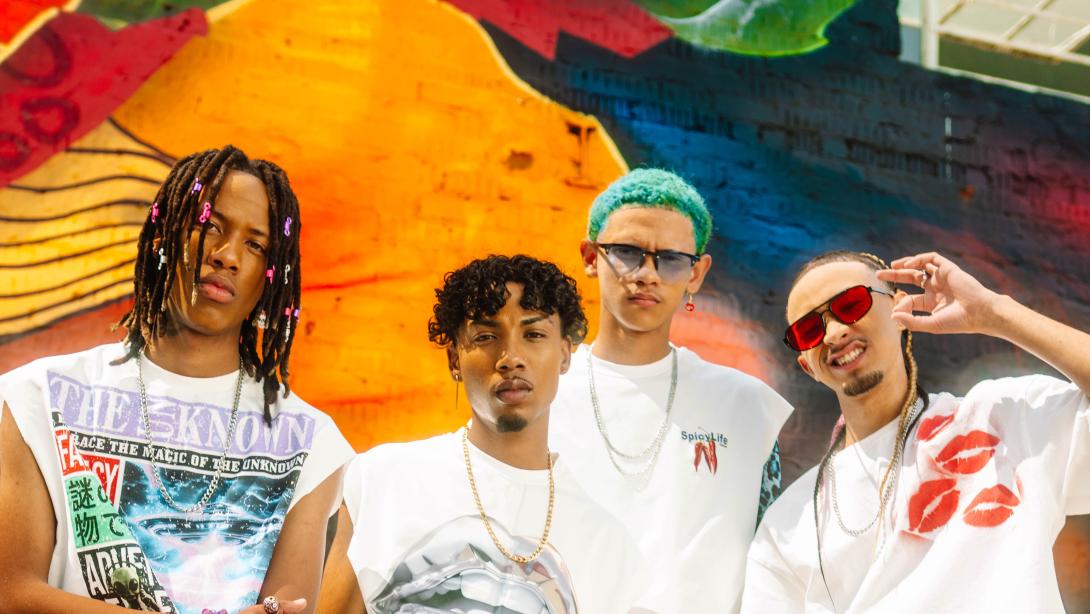
South African pop group DEY SAY has announced a Kenya tour slated for March 7–14, 2026, with Nairobi set to be the first stop on what it described as an international tour across multiple African markets. The group is also pushing its single “Calling For You (Ringback)”, which it said has gained traction on TikTok, and will hold a meet-and-greet performance event at Ball Point, Village Market in Nairobi on March 14, 2026 at 6pm, according to a press release dated February 18, 2026.

The tour, dubbed KTOF (Kids Take Over the Future), positions Kenya as the entry point into East Africa for the Johannesburg-based act. DEY SAY’s members are Chadwell Johnson, Leandre Johnson, Elim Solomons and Joaquin Jardine, aged between 16 and 20, the statement said.

The announcement adds to a growing pipeline of regional music and entertainment acts using Nairobi as a launchpad for East African expansion—reflecting the city’s role as a hub for youth culture, brand partnerships, live events, and digital distribution. Kenya’s creative economy has been drawing increased interest from regional labels, promoters and content-led businesses seeking audiences that are active on social platforms and receptive to cross-border collaborations.

DEY SAY’s organisers said the Nairobi leg will include engagement with fans and live performances of “Calling For You (Ringback)”. The release describes the song as blending African and Latin rhythms with global pop influences. The group’s management also pointed to the act’s online reach, stating it has more than 130,000 TikTok followers and over 10 million collective views.

Quaid Dunn, Co-Founder and A&R Lead at Plus Two Seven, said Kenya was selected deliberately as the first stop. “Kenya was intentionally chosen as the starting point for its strong influence on youth culture and its role as a gateway into East Africa’s vibrant creative ecosystem,” Dunn said in the press release.

Jonathan Jules, Co-Founder and Business Lead at Plus Two Seven, linked the tour to creator development. “KTOF empowers young African creators to dream bigger and reach further,” Jules said.

After Kenya, the group plans to return to South Africa for a national schools programme before continuing to Namibia, Zambia, Tanzania, Rwanda, Uganda and Ghana, according to the statement. The tour plan includes live performances, media appearances and “youth-focused workshops”, the organisers said, suggesting a format that blends entertainment with skills and community programming—an approach increasingly used by creative companies to build audiences while opening up sponsorship and partnership opportunities.

For Kenya’s events and entertainment ecosystem, the Nairobi stop points to continued demand for venue-led activations in retail and lifestyle destinations such as Village Market, as well as the commercial value of fan events that can be monetised through ticketing, brand placements and digital content. The cross-border itinerary may also support regional collaborations in production, promotion and distribution, particularly as Kenyan agencies and venues compete to host touring acts.

Looking ahead, the press release said 2026 will be a key production year for DEY SAY, with the group working on a debut double EP set for release later in the year. Interview requests are being handled via Anyiko PR, the statement said.

South African pop group DEY SAY has announced Nairobi as the launch market for its Pan-African tour, scheduled for March 7–14, 2026. The group is also promoting its single “Calling For You (Ringback)” and plans a meet-and-greet performance at Village Market on March 14.

Safari Rally boosts Naivasha trade as vendors lean on mobile credit and digital payments

Safari Rally boosts Naivasha trade as vendors lean on mobile credit and digital payments

4 min read

Small business vendors working around Naivasha during the 2026 WRC Safari Rally reported an increase in sales as thousands of spectators travelled to rally stages in the lakeside town, according to a media statement shared for publication. Traders interviewed in the statement said the event created a seasonal surge in demand for merchandise and food, while mobile credit and digital payments helped them manage stock and transactions.

The Safari Rally, which returned to Kenya in 2021, has become a recurring commercial peak for micro and small enterprises that follow the circuit to Naivasha. The statement describes vendors travelling from towns including Nakuru, Nairobi, Thika and Kiambu to set up temporary stalls near spectator stages such as Sleeping Warrior, Kedong and Hell’s Gate.

Ayub Mwangi, a tailor based in Nakuru, said he shifts to selling rally-related merchandise during the event, including kites, vuvuzelas and hats. “I have never missed a rally since it returned to Kenya in 2021,” Mwangi said. “Every year I travel to Naivasha because the business here is good. I cannot say exactly how much I make each day, but I always go home happy. A single kite sells for around KES 500, which is more than I might make in a day from tailoring.”

Mwangi said he used a Taasi Pochi loan to increase working capital ahead of the rally. “I needed extra capital to buy enough merchandise for the crowds, so I took a Taasi Pochi loan to boost my business since I didn’t have sufficient funds for stock. The support has truly paid off,” he said.

The statement said Taasi Pochi is a type of Pochi La Biashara loan that allows Safaricom merchants to access instant credit of between KES 1,000 and KES 250,000, available via *USSD 334# or the M-PESA app, with repayment periods of seven, 14 or 30 days.

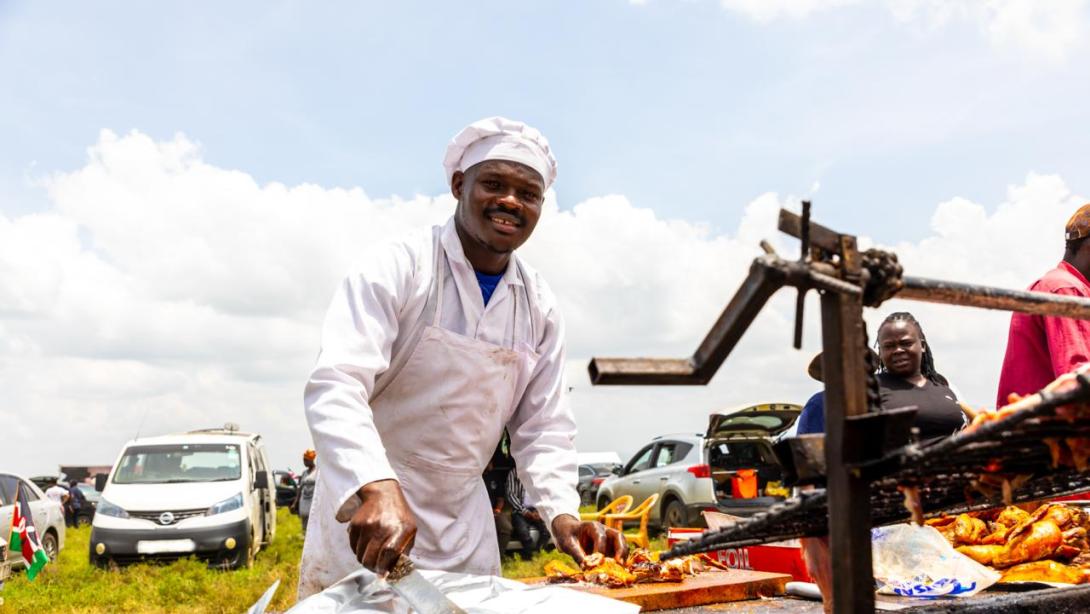
Food vendors also reported stronger demand at key stages. Maria Wanjiru, who runs Shiro Nyama Choma in Roysambu, Nairobi, said she changed her product strategy after an earlier attempt selling soft drinks. “This is my second year coming to the rally,” Wanjiru said. “Last year I tried selling sodas and it did not work very well. This year I decided to focus on nyama choma and the response has been amazing.”

Wanjiru said she relied mainly on M-PESA payments. “At this event, I am mostly using Lipa Na M-PESA, specifically Buy Goods. It makes business smoother because customers can pay quickly, and I don’t have to worry about looking for change when things get busy,” she said. Her assistant, Job Ogamba, attributed the stronger trade to higher footfall. “The turnout has been incredible,” Ogamba said. “There are so many people coming through the stages. Events like this really create opportunities for small traders.”

For younger traders, the rally offered an alternative income channel. Ian Juma, a 25-year-old from Thika, said he paused boda boda work to operate a mobile snack cart selling smokies, boiled eggs, tea and soda. “In Thika I sell a smokie or egg for about KES 25, but here the demand is much higher,” Juma said, adding that he moved between stages to follow the crowds.

Not all vendors experienced peak-year gains, according to the statement. Joel Macharia of Linkers Butchery in Kiambu said business was “steady” compared with earlier years but still beneficial for traders. “Some of my friends have done extremely well this year,” Macharia said. “Large events like this always bring opportunities.” He added that digital payments were increasingly important for security and convenience in crowded environments.

For Kenya’s business landscape, the rally’s spillover effects underscore how major sports and tourism events can support micro-enterprises through temporary jobs, logistics demand and cashflow for informal traders. The emphasis on mobile credit and digital acceptance also highlights the role of fintech tools in helping small merchants handle short, high-volume trading windows—particularly when working capital constraints limit the ability to stock in advance.

Looking ahead, traders interviewed in the statement indicated the rally weekend is now built into their annual planning, from early travel and site selection to financing and payment setups. As the WRC Safari Rally continues on Kenya’s calendar, Naivasha is likely to remain a focal point for seasonal enterprise tied to spectator-driven spending.

Small business vendors operating around Naivasha during the 2026 WRC Safari Rally reported stronger sales driven by large spectator crowds, according to a media statement shared for publication. Traders cited higher volumes for food and merchandise, with some using Safaricom’s Taasi Pochi credit and Lipa na M-PESA to manage stock and payments.

Africa Logistics Properties names PIDG and MOBILIST as cornerstone investors in NSE-listed ALP REIT

Africa Logistics Properties names PIDG and MOBILIST as cornerstone investors in NSE-listed ALP REIT

4 min read

Africa Logistics Properties Holdings Limited (ALPH) has named the Private Infrastructure Development Group (PIDG) and the MOBILIST programme as strategic cornerstone investors in its ALP Industrial Real Estate Investment Trust (ALP REIT), which listed on the Nairobi Securities Exchange (NSE) on Wednesday, March 11, 2026.

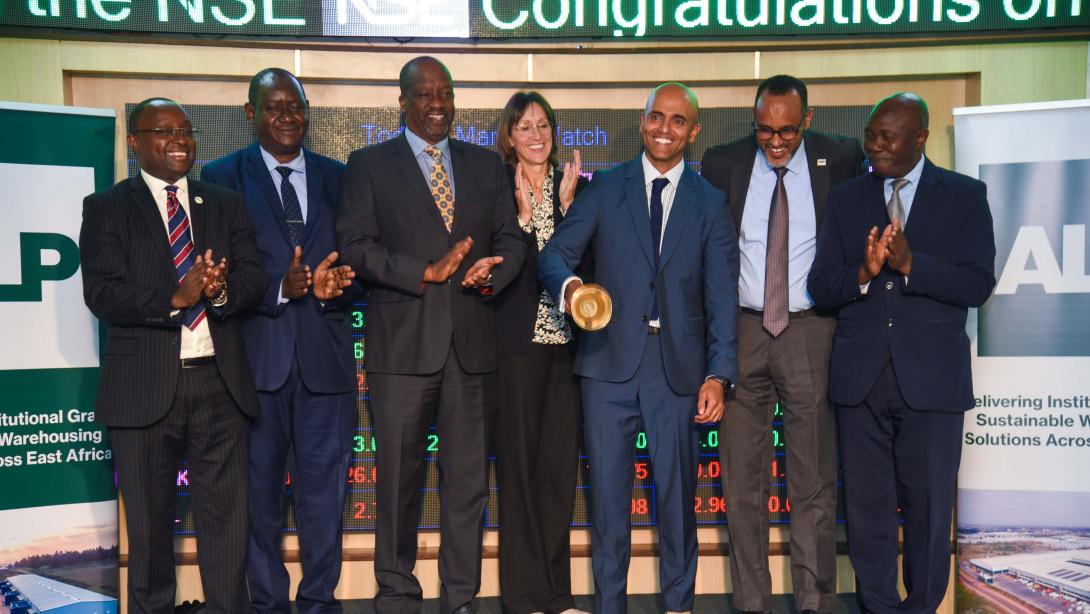
In a statement issued in Nairobi, ALPH said the UK government committed USD 24 million (KES 3.14 billion) to the listing through PIDG and MOBILIST, with PIDG committing USD 15 million (about KES 1.97 billion) and MOBILIST investing USD 9 million (about KES 1.18 billion). The company said the announcement was made during a bell-ringing ceremony marking the official listing.

ALPH said the ALP REIT was approved by the Capital Markets Authority (CMA) and is the first industrial REIT in East Africa as well as the first USD-denominated security to list and trade on the NSE. The company said it raised USD 29.55 million (about KES 3.87 billion) through the REIT, while the total listing was valued at USD 39.95 million (about KES 5.23 billion). It added that the figure excludes USD 5 million (about KES 655 million) of PIDG’s overall commitment, which it said will be invested as the REIT scales.

The transaction adds a new listed product to Kenya’s capital markets at a time when regulators and market players have been seeking to broaden investment options beyond equities and government securities. ALPH said the anchor investments helped it attract additional investors, including local and regional institutional investors.

Raghav Gandhi, Chief Executive Officer of ALPH, linked the listing to broader capital markets development and industrial investment. “This milestone underscores Kenya’s growing capital markets maturity and the increasing attractiveness of industrial real estate as a sustainable investment class. The participation of PIDG and MOBILIST demonstrates strong international confidence in Kenya,” Gandhi said.

PIDG said it is investing through its project development solution, InfraCo. Claire Jarratt, PIDG Head of Investment Management for InfraCo, said PIDG had previously supported the use of REIT structures in Nairobi and is extending that approach to industrial property. “Having anchored the establishment of REITs for affordable housing in Nairobi, PIDG is familiar with the REIT structure, and we know that it works to mobilise vital new sources of capital for economic development,” Jarratt said.

Ross Ferguson, Programme Lead for MOBILIST within the Foreign, Commonwealth, and Development Office (FCDO), said the approach aims to support new types of listed products. “In Kenya, creating listed products that domestic pension funds can invest in is essential to reducing their over-reliance on government debt and directing long-term capital to the businesses that drive growth,” Ferguson said.

NSE Chief Executive Officer Frank Mwiti said the listing brings a new asset class to the exchange. “The debut of the dollar-denominated Industrial I-REIT is a historic milestone for our market,” Mwiti said, adding that the product offers investors access to the industrial logistics sector.

ALPH said it has developed two industrial parks in Kenya since 2016: ALP North in Tatu City with 50,000 square metres and ALP West in Tilisi with 20,000 square metres. The company said the facilities include large-format warehouses and are built to IFC EDGE Advanced green building standards.

Looking ahead, ALPH said it is developing ALP West Kivu, a 10,500-square-metre project it expects to complete in Q3 2026. Market observers will watch how trading and investor participation evolves for the dollar-denominated REIT on the NSE, as well as whether the listing encourages additional real estate and infrastructure-linked products to come to Kenya’s public markets.

Africa Logistics Properties Holdings Limited has announced USD 24 million (about KES 3.14 billion) in UK government-backed cornerstone investments in its ALP Industrial REIT, which listed on the Nairobi Securities Exchange on March 11, 2026. The listing, approved by the Capital Markets Authority, is the first industrial REIT in East Africa and the first USD-denominated security to trade on the NSE, according to the company.

African Mining Week 2026 to spotlight mining law reforms as countries seek investment

African Mining Week 2026 to spotlight mining law reforms as countries seek investment

4 min read

African Mining Week 2026 will be held in Cape Town, South Africa, on October 14–16, bringing together policymakers, industry leaders and investors to assess how recent mining law reforms across Africa are influencing investment decisions and downstream processing plans, according to a statement distributed by APO Group on behalf of Energy Capital & Power on March 11, 2026.

The conference comes as several mineral-producing and frontier markets revise mining codes, introduce new bills and adjust licensing rules in an effort to attract capital, diversify mineral output and capture more value through beneficiation. Energy Capital & Power said modernised legal and regulatory frameworks are aimed at providing clearer rules and improving transparency, factors that can affect financing, exploration activity and project development timelines.

In Liberia, the government is preparing to introduce a new Mining Code “within the next three months” and plans to create a National Mining Company to increase state participation in major projects, Energy Capital & Power said. The publication reported that nearly 80% of Liberia remains geologically unexplored.

“Liberia’s geology is exceptionally rich,” said Matenokay Tingban, Minister of Mines and Energy, in an interview with Energy Capital & Power in January. “We are seeking geomapping and exploration partners. Access to geoscientific data will allow us to negotiate stronger investment deals and develop downstream infrastructure.”

Energy Capital & Power added that iron ore currently dominates Liberia’s output, with the country “targeting 30 million tons per year by 2026,” while the planned framework is expected to support diversification into other resources and encourage partnerships for exploration and downstream processing.

Namibia is finalising a new Minerals Bill to replace its 2002 legislation, with reforms intended to support local beneficiation, broader participation and investment competitiveness, the statement said. Isabella Chirchir, Mining Commissioner at Namibia’s Ministry of Industry and Mines, said the reforms aim “to attract capital to diversify production beyond diamonds and uranium toward strategic metals such as lithium and rare earths,” according to Energy Capital & Power.

In Central Africa, the Republic of Congo approved a draft mining code in November 2025 that introduces competitive bidding, formal permitting for small-scale miners and provisions to support in-country processing, Energy Capital & Power said. The measures are intended to improve transparency and strengthen domestic value chains for both traditional and strategic minerals.

Beyond these markets, Energy Capital & Power said Ivory Coast is revising its mining code to cover a broader range of minerals—naming chromium, coltan, lithium, copper, cobalt and iron ore—alongside its “existing base of 19 operating mines.” Somalia is also overhauling mining regulations to open up frontier resources including uranium, lithium, cobalt, gold and diamonds, it added.

Energy Capital & Power cited recent policy changes in Mali and Burkina Faso as examples of how regulatory shifts can coincide with production growth and new project pipelines. It said Mali introduced a new Mining Code in 2023 and “continues as Africa’s second-largest gold producer” while advancing lithium projects and a gold refinery with international partners Barrick and B2Gold. It also said Burkina Faso adopted a revised code in 2024 and increased gold production from “roughly 57–60 tons to 94 tons in 2025.”

For Kenya and East Africa, the push for clearer mining rules and licensing procedures in multiple African jurisdictions may intensify competition for exploration and development capital, particularly for minerals linked to battery supply chains such as lithium and rare earths. Regulatory changes in neighbouring and comparable markets can also influence investor expectations around permitting timelines, state participation and beneficiation requirements—factors that typically shape project economics and financing structures.

African Mining Week 2026 is expected to focus on how these legislative changes translate into project execution—from early-stage exploration to processing and refining—at a time when governments are seeking to expand local value addition and improve revenues from mineral extraction.

African Mining Week 2026 will convene policymakers, mining companies and investors in Cape Town on October 14–16 to review how updated mining codes and regulatory reforms across Africa are reshaping project pipelines. Energy Capital & Power says countries including Liberia, Namibia and the Republic of Congo are changing laws to improve legal certainty, increase transparency and expand local value addition.

Rwanda rally champion Queen Kalimpinya set for Safari Rally debut with KCB Racing Team

Rwanda rally champion Queen Kalimpinya set for Safari Rally debut with KCB Racing Team

4 min read

Rwandan rally driver Queen Kalimpinya is preparing to make her debut at the Safari Rally Kenya, marking her first international competition after building her career in Rwanda’s national championship circuit. The entry comes through the KCB Racing Team, which she said has enabled her to take on the event, described in the statement as one of the most demanding fixtures on the rally calendar.

Kalimpinya, who is based in Kigali, is the defending champion in the Rwanda National Rally Championship, according to the statement. Her participation adds to the growing number of East African drivers using the Safari Rally platform to expand regional motorsport visibility and attract sponsorship, mechanics and logistics work linked to rally operations in Kenya.

The Safari Rally has become a significant event for Kenya’s hospitality, transport and automotive services sectors, drawing teams that require local supply chains and technical support across rally routes and service parks. Participation by regional drivers also strengthens cross-border sporting ties within the East African Community, where motorsport is increasingly viewed as both an entertainment product and a commercial activity tied to brand partnerships.

Kalimpinya’s route into rallying began after earlier public exposure in Rwanda’s beauty pageant scene, where she placed 3rd Runner-Up at the Miss Rwanda pageant in 2017, the statement said. She later shifted into motorsport, initially competing as a co-driver before moving into the driver’s seat.

In remarks included in the statement, Kalimpinya described her entry into the sport as gradual before becoming a serious pursuit. “At first, it was simply about trying something new and having fun,” she said. “But the more I learned about the sport and experienced the adrenaline of rallying, the more determined I became to pursue it seriously.”

She also attributed her Safari Rally opportunity to external backing, citing the cost of competing. “When I received the call, I honestly couldn’t believe it,” Kalimpinya said. “Competing in the Safari Rally and other international events has always been a dream. Motorsport requires significant financial resources, and opportunities like this don’t come easily. Thanks to KCB Racing Team, that dream is beginning to take shape.”

For the Safari Rally, Kalimpinya will be partnered with co-driver Olivier Ngabo, whom the statement described as a professional mechanic and mechanical engineering specialist with experience in transportation and car hire services. Ngabo was part of the 2025 Rwanda National Rally Championship-winning crew and won Best Co-Driver of the Year in 2019, according to the statement. The pair have worked together for three years.

They will also compete with an upgraded car, moving from a Subaru GC8 to a Subaru Impreza WRX STI GVB. Kalimpinya said the car has been tested across different terrains to prepare for the rally stages. “The car feels great, and the team has worked extremely hard on the preparation,” she said. “We believe it is ready for the challenge ahead.”

In terms of targets, Kalimpinya said her focus as a first-time entrant is to finish the rally without major issues while remaining competitive, with trophies positioned as an additional ambition.

For Kenya’s motorsport industry, her participation underscores the role of team sponsorships and structured support programmes in enabling regional talent to enter high-cost events. It also highlights a continued shift toward professionalisation—where driver-co-driver stability, engineering capability and vehicle preparation are critical to performance and safety outcomes.

Next steps will include final logistics and compliance preparations ahead of the Safari Rally start, with Kalimpinya and Ngabo expected to compete under the KCB Racing Team banner as they seek to complete the event and evaluate opportunities for further international rallies, as suggested in her remarks.

Rwandan rally driver Queen Kalimpinya is set to make her first appearance at the Safari Rally Kenya after joining the KCB Racing Team, according to a media story shared for editorial use. She will compete alongside long-time co-driver Olivier Ngabo and has upgraded to a Subaru Impreza WRX STI GVB for the event.

ITFC and Mauritania sign KES 129.0 billion framework agreement for 2026–2030 trade finance

ITFC and Mauritania sign KES 129.0 billion framework agreement for 2026–2030 trade finance

3 min read

The International Islamic Trade Finance Corporation (ITFC), a member of the Islamic Development Bank (IsDB) Group, has signed a five-year framework agreement with the Islamic Republic of Mauritania valued at US$1.0 billion (about KES 129.0 billion) to support the country’s trade finance and economic development priorities over the 2026–2030 period.

The agreement was signed on March 10, 2026 in Jeddah, Saudi Arabia, during an official visit by Mauritania’s Minister of Economic Affairs and Development and IsDB Governor, H.E. Dr. Abdallah O. Souleymane O. Cheikh-Sidia, to the IsDB Group headquarters, according to a statement from ITFC distributed by APO Group.

ITFC said the agreement was signed at its headquarters by H.E. Dr. Abdallah O. Souleymane O. Cheikh-Sidia and Eng. Adeeb Yousuf Al Aama, Chief Executive Officer of ITFC. The signing was witnessed by H.E. Mohamed Lemine Dhehby, Governor of the Central Bank of Mauritania and IsDB Alternate Governor for Mauritania, alongside representatives from ITFC and members of the Mauritanian delegation.

Under the framework, ITFC said it will mobilise financing and technical support for priority sectors of the Mauritanian economy, with a focus on energy, banking and private sector development. The planned support includes financing for the import of energy commodities, trade finance facilities and confirmation lines for letters of credit to local banks, and support for small and medium-sized enterprises (SMEs).

ITFC added that the package will also include technical assistance programmes aimed at enhancing agricultural productivity and promoting trade facilitation in strategic sectors.

“Speaking during the occasion, H.E. Dr. Abdallah O. Souleymane O. Cheikh-Sidia, Minister of Economic Affairs and Development of Mauritania, highlighted that the agreement will help mobilize critical financial resources to support national development priorities and foster sustainable economic growth,” ITFC said in the release.

Eng. Adeeb Al Aama, CEO of ITFC, said the agreement “demonstrates ITFC’s continued commitment to supporting its member countries through trade-driven development and will help strengthen key sectors of Mauritania’s economy while expanding opportunities for trade and investment,” according to the statement.

The deal adds to a growing role for development finance institutions in structuring trade-linked funding to address import needs—particularly for energy—while supporting local financial systems via instruments such as confirmation lines for letters of credit. For banks, these arrangements can help manage counterparty risk and improve access to international suppliers, especially in markets where foreign exchange constraints and balance of payments pressures can disrupt trade flows.

For East Africa, including Kenya, the announcement underscores a broader trend within the IsDB ecosystem: channeling large, multi-year trade finance frameworks into member countries, often tied to energy imports, bank liquidity for trade, and SME support. Such programmes can influence regional competition for concessional and trade-linked funding, while shaping trade corridors as member states expand import capacity and strengthen local banking relationships with international counterparties.

ITFC said Mauritania has been a partner since the institution’s inception in 2008, with cumulative approvals exceeding US$1.2 billion (about KES 154.8 billion) for projects supporting key sectors. The corporation’s next steps under the new framework are expected to involve rolling out specific financing lines and technical assistance programmes aligned with the priority sectors identified in the agreement.

The International Islamic Trade Finance Corporation has signed a five-year framework agreement with Mauritania worth US$1 billion (KES 129.0 billion) to support trade finance and capacity-building from 2026 to 2030. The deal targets financing for energy imports, trade facilities for local banks and support for SMEs, according to ITFC.