Real Estate

Kenya’s middle-class housing demand drives uptake of built-in kitchens, LG Electronics says

Kenya’s middle-class housing demand drives uptake of built-in kitchens, LG Electronics says

3 min read

Demand for better-built rental apartments with modern fittings is rising in Kenya, prompting developers to integrate built-in kitchens and other standardised interior features during construction, according to a press release issued in Nairobi on April 2, 2026.

The shift is being driven by tenants who are increasingly prioritising construction quality, security, reliable utilities and fitted interiors over rent alone as the supply of rental units grows and competition intensifies, the statement said.

Kenya’s real estate sector expanded by 33.7% between 2019 and 2023, according to the Kenya National Bureau of Statistics (KNBS), supported by rapid urbanisation and sustained housing demand. The press release added that more than 77% of rental housing in Kenya consists of flats and apartments, reinforcing demand for space-efficient designs and integrated layouts suited to urban living.

Industry players cited in the statement said built-in kitchen appliances—such as hobs, ovens, extractor hoods and microwaves—are increasingly being installed at the construction stage rather than after occupation. Developers, the release said, view this as a way to standardise unit quality, reduce post-handover modification costs and strengthen tenant appeal.

“There is a growing preference for housing that is delivered as a complete product rather than unfinished space,” said Erick Otieno Onyango, Home Appliance (Cooking) Product Manager at LG Electronics East Africa. “Built-in kitchens are becoming important because they allow developers to optimise space and deliver consistency across units while responding to changing tenant expectations.”

Cost remains a key factor in adoption, particularly in a price-sensitive market. The press release said LG’s entry-level built-in kitchen packages are increasingly positioned as cost-efficient additions when installed during construction, typically ranging between about KES 90,000 and KES 120,000 depending on configuration. Developers quoted in the release said bulk procurement and installation can make integrated appliances viable even in mid-market and affordable housing when spread across overall project costs.

The move towards standardised fittings comes against a backdrop of significant housing need. The statement cited an estimated annual housing demand of about 200,000 units in Kenya, a figure that continues to support the development of multi-family housing, student accommodation and mixed-use residential projects where repeatable interior specifications can reduce maintenance variability and improve operational planning.

Beyond kitchens, developers are also investing in shared amenities as a differentiator in high-density projects. LG said it has supported the installation of more than 200 laundromat facilities across Kenya, with planned expansion into Mombasa, Kisumu, Nakuru and Eldoret as more residential developments incorporate shared services into their designs.

For Kenya’s property market, the implications are twofold. First, developers are likely to face stronger pressure to upgrade specifications as tenants compare properties on overall living standards and lifecycle costs, including maintenance reliability. Second, appliance makers and distributors may see growth opportunities tied to developer-led procurement rather than individual household purchases, potentially shifting sales strategies towards partnerships with contractors, real estate firms and facility operators.

In the near term, market participants expect continued uptake of fitted interiors in Nairobi’s apartment segment, with gradual spillover to other urban centres as new developments target middle-income tenants seeking ready-to-live spaces. Further adoption will depend on construction costs, access to financing for developers, and whether tenants ultimately accept higher rents that may accompany upgraded specifications.

Kenya’s rental market is seeing higher demand for apartments delivered with fitted interiors, including built-in kitchen appliances, as tenants place more weight on quality and functionality, according to industry players. LG Electronics East Africa says bulk installation during construction is making integrated kitchens more common in mid-market housing, as developers compete for more selective renters.
Crown Paints Kenya partners with Mabati Rolling Mills on KSh 50,000 voucher offer for Lifestile buyers

Crown Paints Kenya partners with Mabati Rolling Mills on KSh 50,000 voucher offer for Lifestile buyers

3 min read

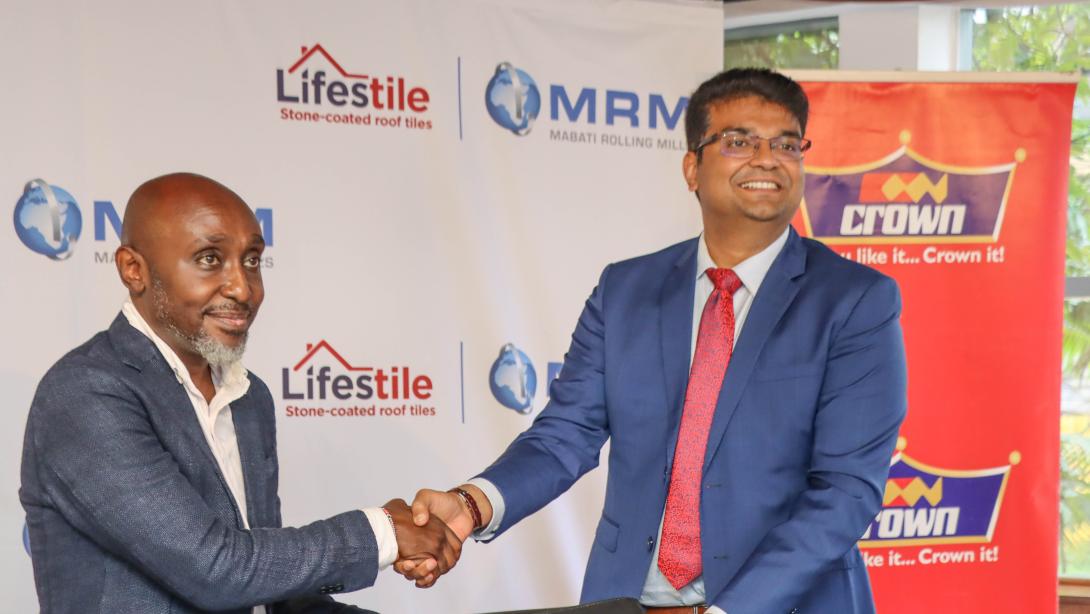
Crown Paints Kenya PLC has announced a strategic partnership with Mabati Rolling Mills (MRM), a member of the Safal Group, that will offer homeowners a KSh 50,000 Crown Paints voucher when they purchase Lifestile Stone Coated Roofing tiles worth KSh 550,000 and above.

The companies said the offer was announced in Nairobi on March 24, 2026, and is intended to help homeowners move from roofing to finishing stages of construction with fewer cost constraints. Under the arrangement, eligible customers will redeem the vouchers at authorised Crown Paints outlets, with redemption points available at Crown Paints showrooms across Kenya, according to the statement.

The partnership brings together a listed paint manufacturer and a major roofing solutions provider in a construction market that has been sensitive to household budgets, input costs and changing consumer preferences for longer-lasting building materials. For Kenya’s building finishes and roofing segments, such joint promotions are a sign of increased bundling among suppliers seeking to capture a larger share of the end-to-end homebuilding spend.

Kelvin Munyi, Group Marketing Manager at Crown Paints Kenya PLC, said the partnership is aimed at easing the finishing phase for homeowners. “We want to help you turn your house into a beautiful, healthy home. By joining forces with MRM, we’re making it easier for homeowners to choose premium, eco-friendly finishes like our low-VOC Crown Aqua Glow. This KES 50,000 voucher is our way of rewarding your investment, ensuring you don't have to compromise on that perfect, sustainable look for your dream project,” Munyi said.

MRM said the collaboration is also intended to create a more integrated offering between the roof and the finishing system. Geoff Anthony, Head of Sales – Building Solutions & Steel at Mabati Rolling Mills, said: “Our Lifestile stone-coated tiles are engineered for extreme durability and architectural excellence. This partnership with Crown Paints allows us to offer a technically superior building envelope, integrating high-performance roofing with specialized finishing systems. By aligning our premium product lines, we are providing developers with a streamlined, high-specification solution that meets the rigorous demands of modern construction while enhancing the structural integrity of the project.”

According to the press release, the voucher can be used on a range of Crown Paints products, including Crown Aqua Glow, Crown Silk Vinyl, Crown Ultraguard Silicone, and Crown Rain Protek. The company described the products as “low-VOC” and positioned the offer around long-lasting protection and healthier living environments.

Industry observers note that the promotion underscores a broader push by building materials manufacturers to influence homeowner decision-making earlier in the construction cycle, when major spend decisions—roofing, exterior protection and interior finishes—are sequenced. If taken up, such offers can support cross-selling while encouraging customers to standardise on a set of products within a single supplier ecosystem.

The companies said the promotion will run for two months. They did not disclose expected uptake, the total value of vouchers to be issued, or the number of participating retail outlets.

Crown Paints Kenya PLC has partnered with Mabati Rolling Mills to offer a KSh 50,000 Crown Paints voucher to customers who buy Lifestile stone-coated roofing tiles worth KSh 550,000 and above. The two-month promotion aims to link roofing purchases with finishing materials as homeowners move to the final stages of construction projects.

AHI Carrier opens dealer-based Carrier and Toshiba HVAC showroom in Nairobi with North Star Cooling Systems

AHI Carrier opens dealer-based Carrier and Toshiba HVAC showroom in Nairobi with North Star Cooling Systems

4 min read

AHI Carrier, a joint venture of Carrier Global Corporation, has opened its first dealer-based Carrier and Toshiba HVAC showroom in Nairobi, partnering with North Star Cooling Systems, as it seeks to expand its presence in Kenya and the wider East African market.

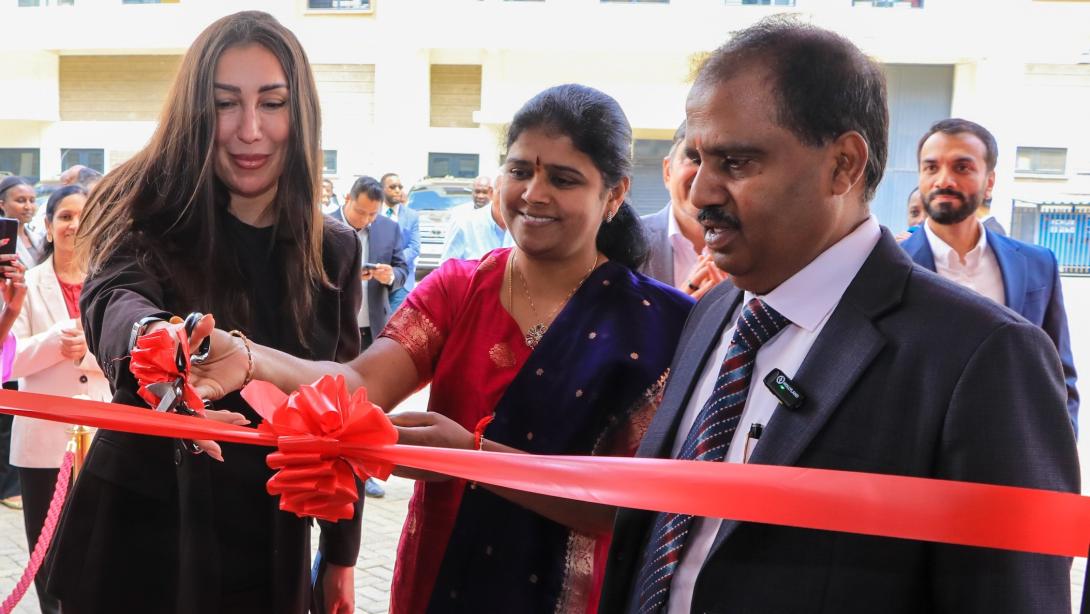
The showroom was inaugurated on February 16, 2026, by Afaf Kontar, Chief Executive Officer of AHI Carrier, together with Kishore Reddy, Managing Director of North Star Cooling Systems, according to a statement issued by the companies.

The opening adds a physical customer-facing facility to support sales and technical engagement around heating, ventilation and air conditioning (HVAC) systems at a time when Kenya’s construction pipeline continues to be driven by urbanisation, commercial developments and new requirements around energy performance in buildings.

AHI Carrier said the facility is designed as “a fully integrated HVAC experience and reference center,” targeting developers, consultants, engineers and contractors who want to evaluate system capabilities and suitability for local operating conditions.

In its statement, the company linked the launch to growing demand for “reliable, energy-efficient cooling solutions” across commercial, residential, healthcare and data-driven developments. While the company did not disclose the value of the investment, the move signals a push to deepen on-the-ground engagement in Kenya’s built environment and mechanical services supply chain.

Beyond showcasing equipment, the companies said the showroom will also be used for technical collaboration, certified training and project advisory services. AHI Carrier said the intention is to build local technical capacity and support professional development as part of efforts to “raise industry standards and strengthen the regional HVAC ecosystem.”

During the inauguration, Ms. Afaf Kontar said Kenya is central to the company’s East Africa strategy. “Kenya remains central to AHI Carrier’s East Africa strategy,” she said, adding that the showroom reflects “a clear commitment to long-term partnership and local market development.” She said the facility would enable customers to experience “real-time operational performance” and better understand the “measurable value of advanced HVAC technologies.”

Mr. Kishore Reddy said the showroom is intended to support North Star Cooling Systems’ growth ambitions in the region. He described the opening as “a milestone in North Star Cooling Systems’ regional growth journey,” and said the facility offers a collaborative environment for customers and consultants to engage directly with “high-efficiency solutions aligned with evolving market expectations.”

The launch comes as HVAC demand in Kenya is influenced by several parallel trends: expansion of modern office and retail space, growth in hospitals and specialised healthcare facilities, increasing installation of mission-critical cooling for data and digital infrastructure, and tighter scrutiny of operating costs in buildings due to electricity prices. In this context, dealer-based showrooms can help shorten decision cycles by allowing project teams to review specifications, compare options and coordinate after-sales support early in the procurement process.

For Kenya’s HVAC market, the move may intensify competition among major equipment brands and distributors, especially in commercial and institutional segments where technical compliance, installation quality and maintenance capability can be decisive. The emphasis on training and advisory services could also raise expectations around certification and service standards among contractors and technicians.

AHI Carrier and North Star Cooling Systems said the partnership aims to make HVAC technologies more accessible in Kenya and East Africa, while responding to infrastructure demand. The companies did not provide a timeline for additional openings, but described the Nairobi facility as part of a regional expansion strategy and a platform for continued local market development.

AHI Carrier has opened its first dealer-based Carrier and Toshiba HVAC showroom in Nairobi in partnership with North Star Cooling Systems. The company said the facility will function as an experience and reference centre for developers and engineers, alongside training and advisory support aimed at the Kenyan and wider East African market.

Africa hotel development pipeline hits record 123,846 rooms as Kenya ranks fourth in new supply

Africa hotel development pipeline hits record 123,846 rooms as Kenya ranks fourth in new supply

4 min read

Africa’s hotel development pipeline has climbed to a record 123,846 rooms across 675 hotels and resorts, with East Africa posting some of the highest shares of rooms under construction, according to the 2026 Hotel Chain Development Pipelines in Africa report by W Hospitality Group released on March 10, 2026 in Cape Town.

The report shows year-on-year pipeline growth of 18.6%, or 12.2% on a same-store basis, and indicates that hotel development is increasingly concentrated in a small number of markets. W Hospitality Group said the top 10 countries now account for 79% of total pipeline rooms and more than 75% of new signings.

Kenya ranked fourth by pipeline rooms, with 6,190 rooms across 35 hotels. Ethiopia ranked fifth with 5,964 rooms across 34 hotels, while Tanzania ranked eighth with 4,159 rooms across 29 hotels, underlining East Africa’s continued relevance to Africa’s hotel investment map.

The largest pipeline remains in North Africa. Egypt led the continent with 45,984 rooms across 185 properties—more than one-third of the entire pipeline and more than four times Morocco’s 10,606 rooms. W Hospitality Group said Egypt and Morocco together account for more than 45% of total pipeline rooms, supported by new signings. The report said Egypt recorded 39 new deals last year and anticipates 33 openings in 2026.

“The data clearly show that Africa’s hotel development story is being driven by a handful of high-performing markets, with Egypt firmly at the forefront in both signings and projected openings,” said Trevor Ward, Managing Director of W Hospitality Group, in comments cited in the release.

While North Africa leads in total volume, the report said execution momentum is strongest in East Africa. Kenya has 4,922 rooms under construction out of a 6,190-room pipeline, representing 79.5%, while Ethiopia has 4,768 rooms under construction (79.9%). Tanzania follows with 3,222 rooms under construction (77.5%). By comparison, W Hospitality Group reported lower under-construction shares in some markets, including Nigeria at 39.2% and Cape Verde at 8.6%.

“What stands out this year is the strength of East Africa in terms of projects moving forward. Kenya, Ethiopia and Tanzania show some of the highest construction ratios on the continent, which suggests that this is where we are likely to see new supply coming through in the short to medium term,” Ward said.

For Kenya, the high proportion of projects under construction signals that a meaningful share of planned rooms is more likely to reach completion compared with markets where projects are still at early stages. In business terms, that can translate into increased competition in Nairobi and key leisure corridors, while also creating opportunities for construction, fit-out, professional services, and hotel staffing as projects move toward opening.

The report also points to concentration among international operators. It said Marriott International leads Africa’s pipeline by rooms with 31,782, followed by Hilton and Accor, and added that the five largest global chains—Marriott, Hilton, Accor, IHG and Radisson Hotel Group—account for around 80% of all pipeline hotels and rooms on the continent.

Looking ahead, W Hospitality Group said more than 65,000 rooms are forecast to open in 2026 and 2027, including 31,768 rooms in 2026 and 33,381 rooms in 2027. However, it cautioned that historical actualisation rates suggest deliveries may fall short of projections, highlighting a gap between announced pipelines and completed projects.

Further analysis of signings, construction progress and anticipated openings will be presented at the Future Hospitality Summit Africa, scheduled for March 31 to April 1 in Nairobi, according to the release distributed by APO Group on behalf of Future Hospitality Summit Africa.

Africa’s hotel development pipeline reached a record 123,846 rooms across 675 hotels and resorts, according to W Hospitality Group’s 2026 report. Kenya ranks fourth on the continent by pipeline rooms and is among the leaders in projects under construction, signalling near-term additions to hotel supply in East Africa.