Banking

KCB Group CEO Paul Russo calls for scaled climate finance at Africa business summit in Nairobi

KCB Group CEO Paul Russo calls for scaled climate finance at Africa business summit in Nairobi

3 min read

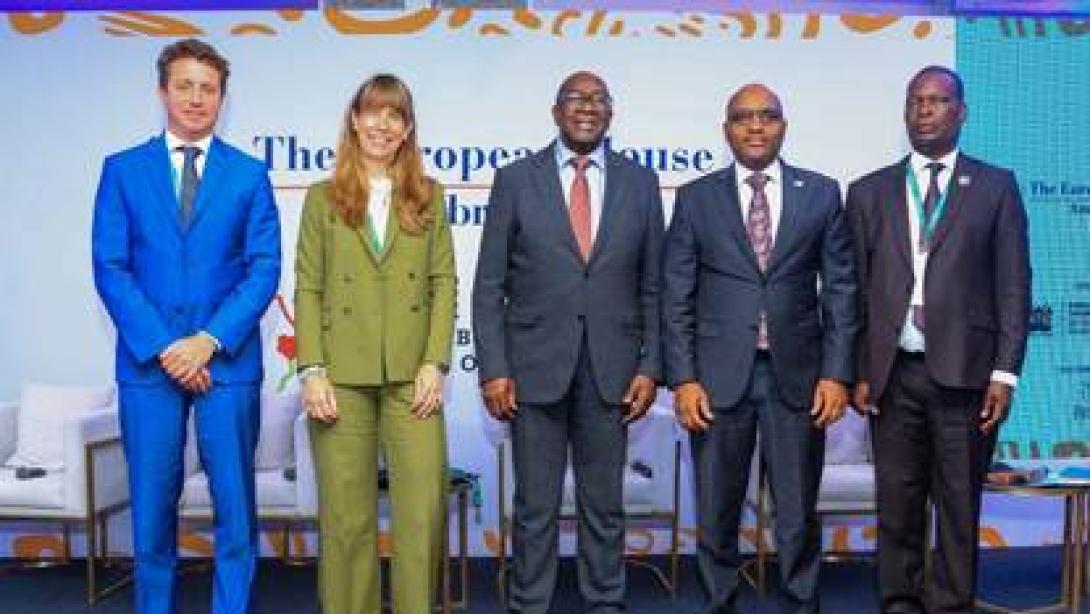
KCB Group CEO Paul Russo joined policymakers, investors and development finance institutions at the 3rd Climate Change Global Business Summit on Africa in Nairobi to discuss how private investment can accelerate climate solutions across the continent, according to a statement circulated after the event.

The summit was held at Villa Rosa Kempinski Hotel and brought together business leaders, senior government officials and sustainability experts to explore financing pathways for Africa’s green transition. The discussions covered mobilisation of capital, climate resilience, and positioning Africa as a destination for sustainable investment, the statement said.

According to the statement, the forum included Agriculture Cabinet Secretary Mutahi Kagwe, private sector representatives including the Kenya Private Sector Alliance (KEPSA), and global investors including the French Chamber of Commerce. Agenda items included unlocking private investment in climate solutions, strengthening sustainable urban development and mobility, and financing climate-resilient energy and infrastructure.

KCB participated in a high-level panel titled “Climate Finance, Equity, and the Just Transition: Unlocking Private Investments in Kenya and Africa,” which the statement said was moderated by journalist Yvonne Okwara.

During the discussion, Russo said partnerships would be critical to making climate projects bankable and investable. “We have built a team of subject matter experts, and we are therefore equipped to co-create solutions,” Paul Russo, KCB Group CEO, said in the statement.

He also pointed to structural constraints in the climate finance market, arguing that stronger collaboration is needed among development finance institutions, governments and commercial banks to share risk, improve project pipelines and unlock long-term capital, according to the statement.

Russo linked the remarks to KCB’s sustainability strategy, saying the lender is prioritising financing for renewable energy, clean technologies and low-carbon growth. “We have set a target to allocate 25% of our total loan book to green financing, helping accelerate the transition toward sustainable industries,” Russo said.

The remarks come as Kenyan banks and corporates seek to finance energy transition and climate adaptation projects at a time when long-tenor, affordable capital remains limited for many borrowers. In Kenya, demand for funding is being driven by renewable energy build-out, climate-smart agriculture, e-mobility, and resilient infrastructure—sectors that often require blended finance structures, guarantees, or concessional capital to close viability gaps.

For the financial sector, commitments such as allocating a share of loan books to green financing can influence competition for climate-aligned deals and may increase pressure to strengthen internal capacity for climate risk assessment and project evaluation. The availability of investable projects—with robust feasibility studies, permitting progress and credible offtake arrangements—remains a key bottleneck across East Africa, market participants say.

Looking ahead, the push for scaled climate finance is expected to continue through policy engagement and deal structuring between banks, development finance institutions and government agencies as Kenya and the region expand pipelines of renewable energy, clean transport and climate-resilient infrastructure projects.

KCB Group CEO Paul Russo has urged closer collaboration between development finance institutions, governments and commercial banks to unlock long-term capital for climate projects. Speaking in Nairobi at the 3rd Climate Change Global Business Summit on Africa, Russo said the lender is targeting 25% of its loan book for green financing, according to a statement shared after the event.

DTB pre-tax profit jumps 26% in 2025, board recommends KES 9 dividend

DTB pre-tax profit jumps 26% in 2025, board recommends KES 9 dividend

3 min read

Diamond Trust Bank (DTB) on 23 March 2026 announced its financial results for the year ended 31 December 2025, reporting a 26% rise in pre-tax profit and a 21% increase in profit after tax to KES 10.7 billion, according to the bank’s statement issued in Nairobi.

DTB attributed the performance to a 15% increase in total assets, a 14% rise in top-line revenues and cost controls that limited operating expense growth to 7% during the year. Customer deposits grew 14% to KES 509 billion, while net loans expanded 14% to KES 324 billion, the bank said.

The lender said customer numbers across East Africa increased to 4.5 million at the end of 2025 from 3.1 million a year earlier, supported by a 157-branch network and a focus on mid-market, SME and retail segments through what it described as “ecosystem banking”.

Asset quality metrics improved, with DTB reporting a reduction in the non-performing loan (NPL) ratio to 10.8% from 12.3% in the prior year. The group’s specific coverage ratio rose to 51.1% from 39.6%, DTB said, adding it is targeting a single-digit NPL ratio by the end of 2026. The bank also reported shareholders’ equity had crossed KES 100 billion.

Following the results, DTB said its Board of Directors has recommended an increased dividend of KES 9 per share.

Nasim Devji, Group Chief Executive Officer at DTB, said the lender’s results reflected execution and operational efficiency. “These results reflect the strength of our strategy and the resilience of our business model. We have delivered quality growth while maintaining strong discipline and enhancing operational efficiency. Our continued investment in digital capabilities is enabling us to serve our customers better and expand access to financial services across our markets,” Devji said.

Murali Natarajan, DTB Kenya Chief Executive Officer, said the bank was also tracking non-financial outcomes alongside profit. “Our performance is not only measured by financial returns, but also by the impact we create. Through our initiatives, we are supporting communities, advancing financial inclusion, and contributing to climate action,” Natarajan said.

DTB’s results come as Kenyan lenders continue to navigate credit risk, funding competition and the shifting cost of capital environment, with NPL management and deposit mobilisation remaining central to profitability. DTB’s reported decline in NPLs and improved provisioning coverage point to a tighter approach to credit risk and recovery, while double-digit growth in deposits and loans suggests continued appetite for credit in its target segments, particularly SMEs and retail borrowers.

The bank also disclosed selected sustainability and social metrics. DTB said it had grown over one million trees under its Much More Than Trees initiative, reached more than 30,000 girls through its Achieve More Girl programme, and trained over 10,000 individuals and MSMEs in financial literacy and enterprise development as at the end of 2025.

Looking ahead, DTB said it will continue focusing on business growth, digital innovation and customer support across segments, while advancing its sustainability agenda. Investors will watch for the bank’s progress towards its single-digit NPL target by end-2026 and for further guidance on dividend approval timelines and capital deployment as loan growth continues.

Diamond Trust Bank (DTB) says its 2025 profit after tax rose 21% to KES 10.7 billion, supported by asset growth, higher revenues and contained operating costs. The lender also reported lower non-performing loans and recommended a KES 9 per share dividend.